On one hand, these tools can help deliver much-needed support.
On the other, they risk increasing sexual inequality, and replacing precious in-person interaction with less-than-ideal substitutes.
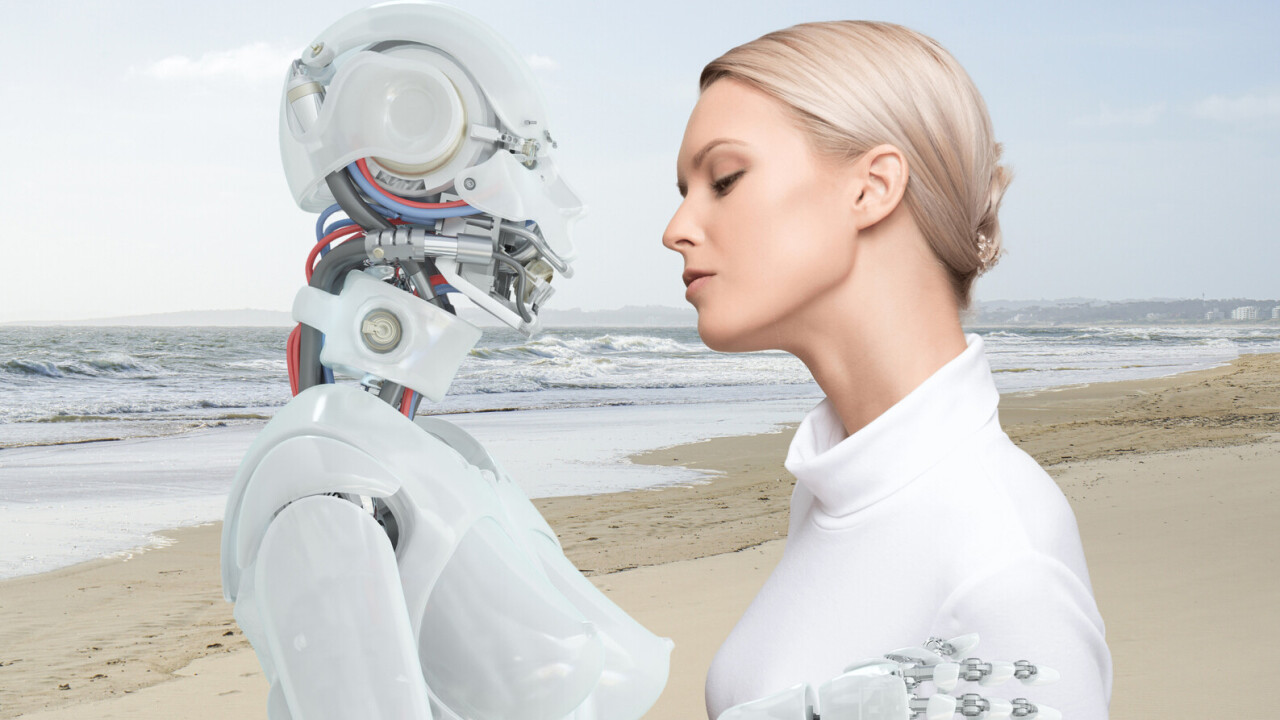
But despite themany important questionssex robots raise, they mostly distract from the main game.
40% off TNW Conference!
Finally, we have virtual friends includingtherapist apps, AI-enhancedgame charactersandboyfriend/girlfriend chatbots.
But by far the most ubiquitous are AI assistants such asAmazons Alexa,Googles AssistantandBaidus DuerOS.

Japanese Macaques grooming in the hotsprings of Nagano. Apes and monkey spend about 20% of their waking hours grooming one another.
I call these human algorithms.
Grooming our friends
Primates, from monkeys to great apes,groom one anotherto build important alliances.
Gossip is an algorithmic process by which we come to know our social worlds.

Social platforms such as Facebook tap into our friend-grooming impulses.
They aggregate our friends, past and present, and make it easy to share gossip.
Their algorithmic matchmaking excels at identifying other users we may know.

This lets us accumulate far more than the150 or so friendswed normally have offline.
After all, time spent online is time not spent in person with friends or family.
Before smartphones, humans spentabout 192 minutesa day gossiping and grooming one another.
The effects of this onmental healthmay be profound, especially for teens and young adults.
Psychologists Arthur and Elaine Aron showed intimacy can berapidly cultivatedthrough a process of escalating self-disclosure.
They tasked randomly assigned pairs of people with asking and answering a series of 36 questions.
The questions began innocuously (Who is your ideal dinner guest?)
Why havent you told them yet?).
One couple famously married and invited the Arons to theirwedding.
We now have apps that help humans build intimacyvia the Arons 36-question algorithm.
But what about human-machine intimacy?
People disclose all sorts of details to computers.
Research shows the more they disclose, the more theytrustthe information returned by the computer.
Virtual friends wouldnt have to study the Arons questions to learn secrets about human intimacy.
Machines are now part of human-human intimacy.
Apps such as Tinder arent really effective at matching compatible couples.
Instead, they present photographs and minimalist profiles, inviting users to swipe left or right.
Their algorithms allow people of more-or-less comparable attractiveness to match and strike up a conversation.
Read more:Love in the time of algorithms: would you let artificial intelligence choose your partner?
Good enough?
Then again, artificial intimacy also offers solutions.
Virtual friends provide connection for the lonely; digital lovers are damming the raging torrent of sexual frustration.
People already talk to Siri and Alexa tofeel less lonely.
The quality of such connection and stimulation might not be a complete substitute for the real thing.
Read more:My robot Valentine: could you fall in love with a robot?
