The system was created by computer scientists from the University at Buffalo.
In tests on portrait-style photos, the tool was 94% effective at detecting Deepfake images.
[Read:How do you build apet-friendly gadget?
We asked experts and animal owners]
40% off TNW Conference!
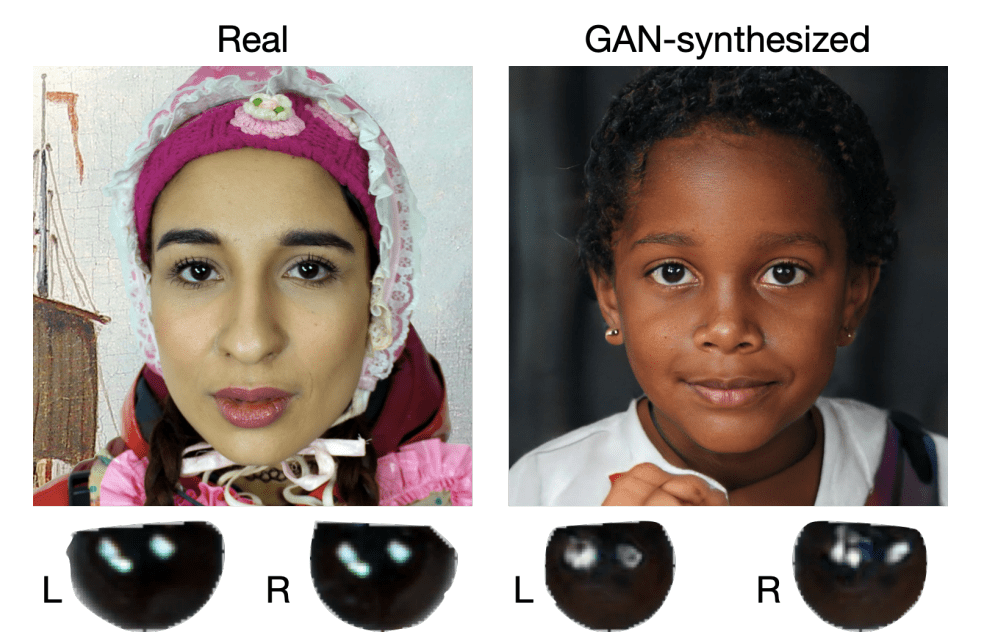
But Deepfake images synthesized by GANs typically fail to accurately capture this resemblance.
Instead, they often exhibit inconsistencies, such as different geometric shapes or mismatched locations of the reflections.
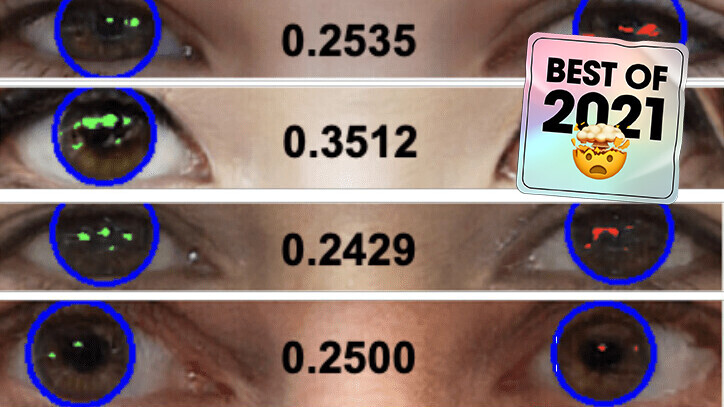
It generates a score that serves as a similarity metric.
The smaller the score, the more likely the face is a Deepfake.
However, the study authors acknowledge that it has several limitations.
The tools most obvious shortcoming is that it relies on a reflected source of light in both eyes.
Its also only proven effective on portrait images.
If the face in the picture isnt looking at the camera, the system would likely produce false positives.
The researchers plan to investigate these issues to improve the effectiveness of their method.
you’re free to read the study paperhereon the arXiv pre-print server.
Story byThomas Macaulay
Thomas is the managing editor of TNW.
He leads our coverage of European tech and oversees our talented team of writers.
Away from work, he e(show all)Thomas is the managing editor of TNW.
He leads our coverage of European tech and oversees our talented team of writers.
Away from work, he enjoys playing chess (badly) and the guitar (even worse).
