A new EU project plans to expand adventures in the cosmos with asuitably space-age technology: lasers.
TheINPHOMIRinitiative is developing the lasers to enhance spacecraft sensors.
By emitting tiny pulses of light, the devices could improve the precision of satellite navigation.
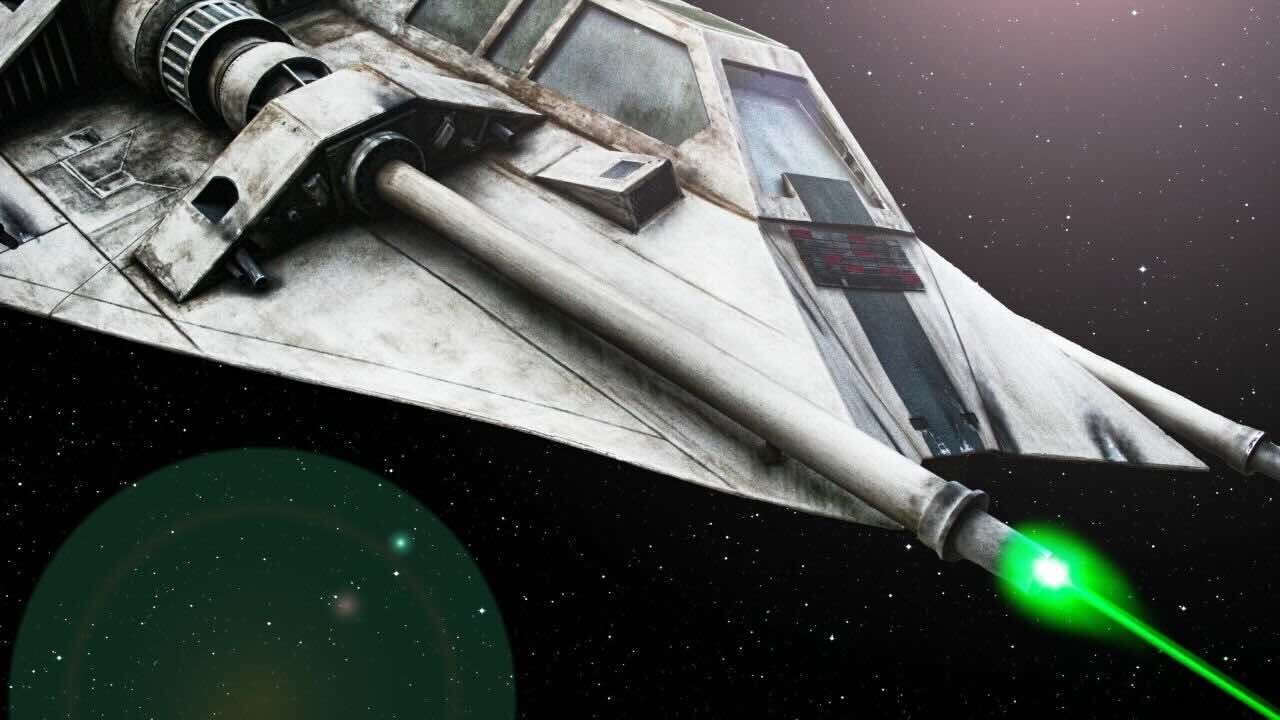
Their accuracy stems from their resistance to the harsh conditions ofspace.
When vicious fog and dust descend upon satellites, traditional sensors are often impeded.
These disruptions can have severe impacts.
A tiny measurement error can cause chaos to space missions and cost millions of euros.
Lasers provide a promising safeguard.
Their ability to function intempestuousenvironments reduces the risks of space exploration.
With a tiny power consumption, they could also keep vehicles flying for longer.
The gyroscope uses spinning beams of light to measure movement and direction.
The lidar, meanwhile, emits laser light to produce 3D maps of the environment.
According to INPHOMIR, these sensors are poised to transform space exploration and autonomous systems.
That potential has caught the EUs eye.
Horizon Europe, the blocs key funding programme for research and innovation, has provided funding for the5mn project.
INPHOMIR said the cash will boost Europes technological sovereignty a key target in the EUs space strategy.
For the last year, the bloc has had no independent access to the cosmos.
That problem is set end next week when the Ariane 6 satellite launcherflies for the first time.
Investing in new spacetech could create another path towards autonomy.
Story byThomas Macaulay
Thomas is the managing editor of TNW.
He leads our coverage of European tech and oversees our talented team of writers.
Away from work, he e(show all)Thomas is the managing editor of TNW.
He leads our coverage of European tech and oversees our talented team of writers.
Away from work, he enjoys playing chess (badly) and the guitar (even worse).
