The U.S.techsector is growing 10 times faster and has wages twice as high as the rest of theeconomy.
This industry also wins the race forhigh profits and stock returns.
At the same time, the tech sectors professional, managerial and executive labor forces are overwhelminglywhite and male.

What we found surprised us.
40% off TNW Conference!
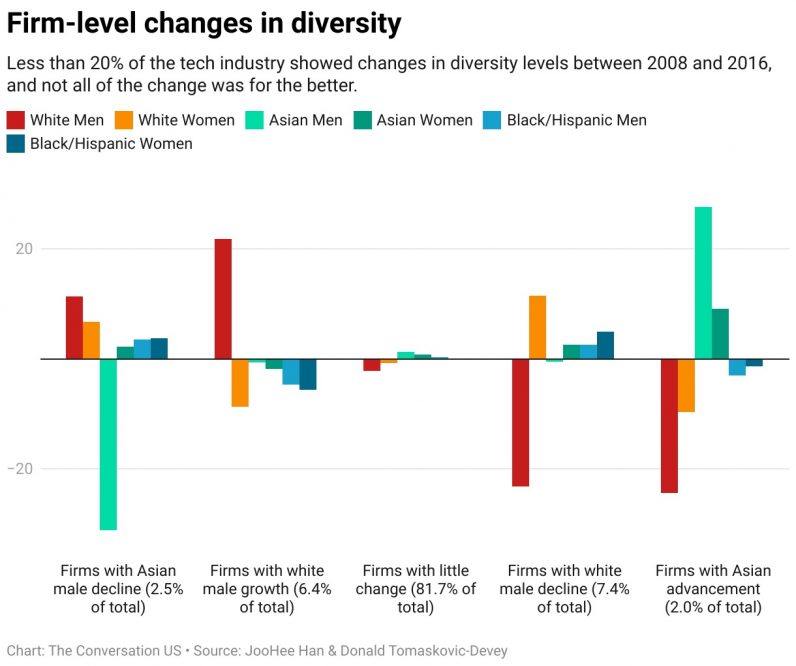
We used aclustering algorithmto identify groups of firms with similar changes in diversity between 2008 and 2016.
We also looked at the managers and executives responsible for human resource practices.
We dont identify specific firms because this data was originally collected by the U.S.
Equal Employment Opportunity Commission, and our ability to analyze it requires strict confidentiality.
Our findings for the remaining 20% of firms surprised us.
We found some firms with rapid increases in diversity among professional jobs, and others where diversity declined substantially.
This latter small group of firms also saw growth in all other groups, even Asian women.
This pattern permitted white male dominance at the expense of Asian men while making room for all other groups.
In both, the percentage of white men declined by about a quarter.
The second group of firms was smaller, representing only 2% of tech firms.
We found similar patterns at the managerial and executive levels.
When do firms become more inclusive?
We also wanted to figure out which types of firms showed a pattern of rapidly increased diversity.
Here we have two more hopeful findings.
Firms where professional diversity was growing rapidly also tended to be among those with rapid overall employment growth.
Window dressing or diversity now?
Unfortunately, this combination is not widespread.
Dramatic improvements in employment diversity are confined to only 10% of firms.
However, a handful of firms demonstrate that diversity is possible now.
This article by DonaldT.
