Every entrepreneur has to overcome obstacles, but few have faced the challenges of Oleksandr Kosovan.
As the founder and CEO of Ukrainian scaleup MacPaw, Kosovan runs his business in a country under invasion.
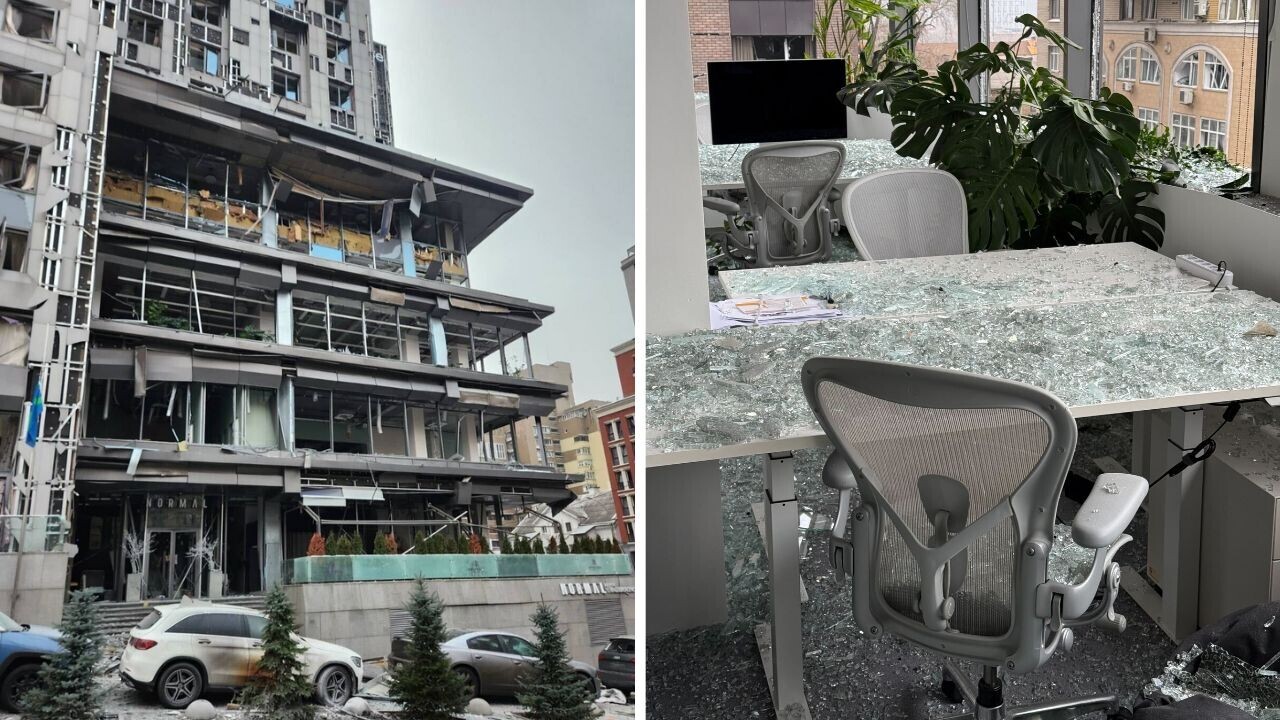
The company has even been hit by missile barrages.
As relentless Russian bombing and shelling pummel Ukraine, his team presses on with their work.
In October, they released a new version of CleanMyMac, MacPaws flagship maintenance and optimisation product.
But two months later, the horrors of war arrived at MacPaws doorstep.

40% off TNW Conference!
The explosion hit MacPaws headquarters, shattering the buildings facade, windows, and engineering equipment.
According to the rescue services, one person was killed in the attack.

Kosovan was en route to an event when a message about the strike appeared on his phone.
The only thing we could do is initiate our emergency procedures, Kosovan says.
We had plans for this risk and they helped us to organise actions because people were panicked.

They didnt know what to do.
Safety measures were swiftly implemented, emergency checks conducted, and recovery steps taken.
The next day, MacPaw gained access to the office building.
Staff worked alongside emergency services to salvage equipment and prevent further damage.
The companys office spans three floors of the building.
The hardest hit of them is still not operational, but the others have reopened.
Staff are already working in them again.
MacPaws wartime adaptations had given the business a head start on the recovery.
Many team members were already working remotely.
Processes had become highly automated.
Staff were spread out geographically and shifts were scheduled to cover all critical roles during emergencies and military call-ups.
While the missile strike was traumatic, MacPaw had been prepared.
Communications security was beefed up, with Signal adopted as a new messaging service.
Office infrastructure was moved entirely to the cloud.
Satellite internet was set up to cover the risk of internet loss.
The company then waited for reports on Russias military moves.
On day one of the full-scale invasion in February 2022, MacPaw activated its risk mitigation plan.
We had to refocus our priorities, Kosovan says.
Hardware management strategies also shifted.
With supply chains disrupted, new laptops now had to be sourced from abroad.
At times, system administrators had to drive to remote locations and personally deliver laptops to team members.
As wartime conditions became routine, the team adapted to their new reality.
Nowadays, their biggest challenge is Russias relentless attacks on Ukrainian energy infrastructure.
The strikes cause frequent and protracted power outages.
To keep operations running, the company has installed extra power and internet access lines.
A backup generator has also been acquired, alongside an uninterrupted internet access point via Starlink.
Starlink helps a lot, Kosovan says.
It is one of the saving factors for Ukraine.
The new measures have kept MacPaws systems running throughout Russias attacks on Ukraines power grid.
But the human impacts have been harder to resolve.
Mentally, this is very hard to process.
People are breaking sometimes, and it is very hard to predict and help them.
For months, staff in Kyiv have endured air strikes day and night.
The brutality of the December missile attack was a stark contrast to the previous day at MacPaw.
Hes personally invested in almost 20 Ukrainian businesses, including Osavul, a Kyiv-based AIstartupthat analyses information threats.
Formed to counter Russian propaganda, Osavul now offers services to governments and businesses alike.
In combat zones, Ukrainian tech also has a powerful impact.
Innovations range from a growing fleet of domestic drones to Delta, a battlefield management system.
Developed by the military, thesoftwarecombines a variety of tools, from digital maps to secure communications.
Ukrainian Army Lieutenant Colonel Yelyzaveta Boiko describes the system as Google for the military.
Google helps to organise your workspace, DELTA helps to organise your war space, shesaidlast year.
Beyond the theatre of war, MacPaw has sought to preserve Ukraines tech heritage.
The latest result isInnovation in Isolation a book that chronicles the countrys IT history.
The stories span from cybernetics pioneers to modern innovators such as Grammarly andReface.
All proceeds from the book will go to humanitarian relief efforts through the MacPaw Foundation.
Yet the project is not solely a charitable endeavour.
Many things that were considered to be built in Russia or USSR were actually created by Ukrainians and Ukraine.
This partially explains why there are so many great tech companies from Ukraine.
We have a very rich heritage.
Even after missile strikes, that heritage continues to flourish.
There are many companies that emerge in these hard times, Kosovan says.
Hard times produce strong people.
If companies can survive, despite the war and all its challenges, the company has a long-term future.
Story byThomas Macaulay
Thomas is the managing editor of TNW.
He leads our coverage of European tech and oversees our talented team of writers.
Away from work, he e(show all)Thomas is the managing editor of TNW.
He leads our coverage of European tech and oversees our talented team of writers.
Away from work, he enjoys playing chess (badly) and the guitar (even worse).
