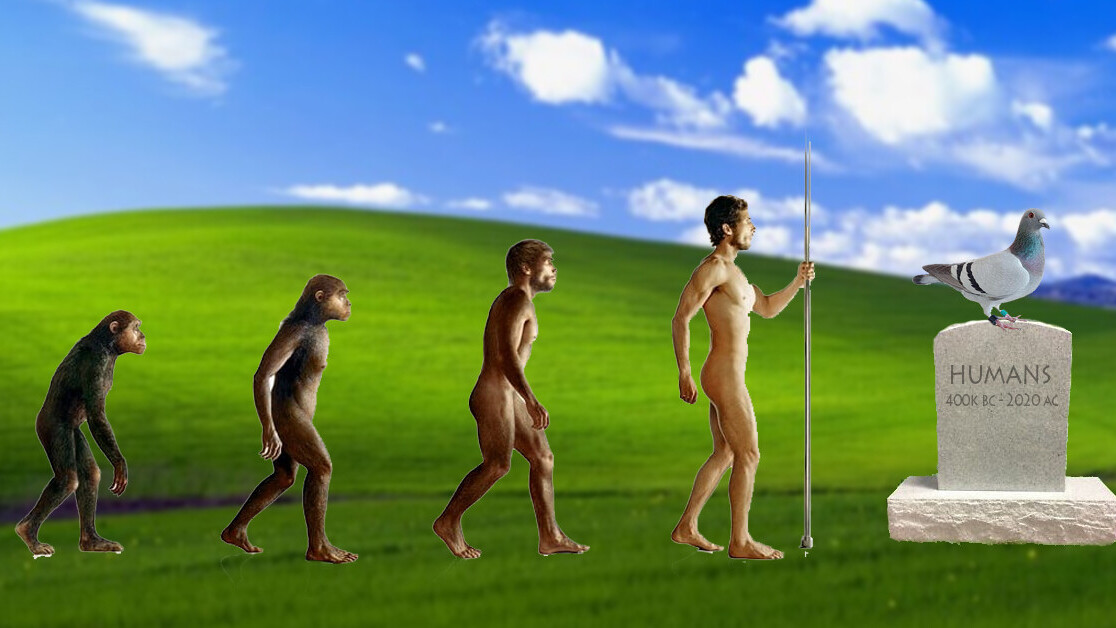
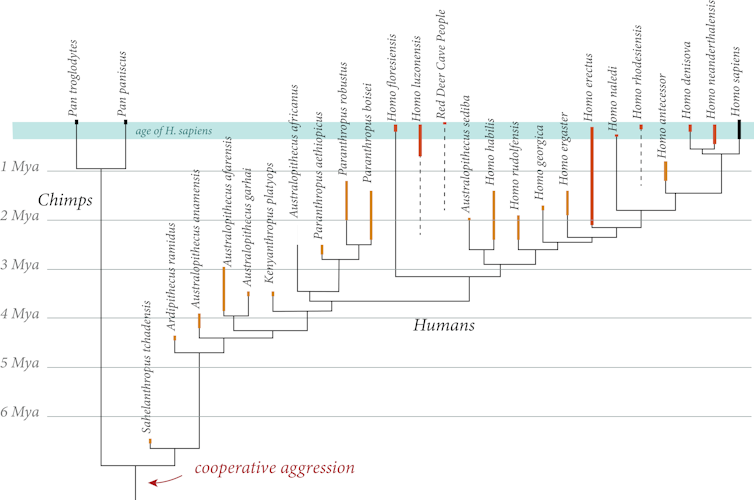
Nine human species walked the Earth 300,000 years ago.
Now there is just one.
The Neanderthals,Homo neanderthalensis, werestocky huntersadapted to Europes cold steppes.
The relatedDenisovansinhabited Asia, while the more primitiveHomo erectuslived in Indonesia andHomo rhodesiensisin central Africa.
Given how quickly were discovering new species, more are likely waiting to be found.
By 10,000 years ago, they were all gone.
The disappearance of these other species resembles a mass extinction.
But theres no obvious environmental catastrophe volcanic eruptions, climate change, asteroid impact driving it.
But were other humans the first casualties?
Nick Longrich
We are a uniquely dangerous species.
We huntedwooly mammoths, ground slothsandmoasto extinction.
We destroyed plains and forests for farming, modifying overhalf the planets land area.

We altered the planets climate.
But we are most dangerous to other human populations because we compete for resources and land.
There have also been recent genocides and ethnic cleansing inBosnia, Rwanda,Iraq, Darfur, andMyanmar.
Theres little reason to think that earlyHomo sapienswere less territorial, less violent, less intolerant less human.
But field studies, historical accounts, and archaeologyall showthat war inprimitive cultures was intense, pervasive and lethal.
Old bones and artifacts show this violence is ancient.
The 9,000-year-old Kennewick Man, from North America, has a spear point embedded in his pelvis.
The 10,000-year-oldNataruk sitein Kenya documents the brutal massacre of at least 27 men, women, and children.
Its unlikely that the other human species were much more peaceful.
The existence ofcooperative violence in male chimpssuggests that war predates the evolution of humans.
Neanderthal skeletons showpatternsoftraumaconsistent with warfare.
But sophisticated weapons likely gaveHomo sapiensa militaryadvantage.
The arsenal of earlyHomo sapiensprobably includedprojectile weaponslike javelins andspear-throwers, throwing sticks andclubs.
The ability to cooperate, plan,strategize,manipulate, anddeceivemay have been our ultimate weapon.
The incompleteness of the fossil record makes it hard to test these ideas.
Traces ofNeanderthal DNA in some Eurasian peopleprove we didnt just replace them after they went extinct.
We met, and we mated.
Elsewhere, DNA tells of other encounters with archaic humans.
East Asian, Polynesian and Australian groups haveDNAfromDenisovans.
DNA fromanother species, possiblyHomo erectus, occurs in many Asian people.
African genomesshow traces of DNAfrom yet anotherarchaic species.
The fact that we interbred with these other species proves that they disappeared only after encountering us.
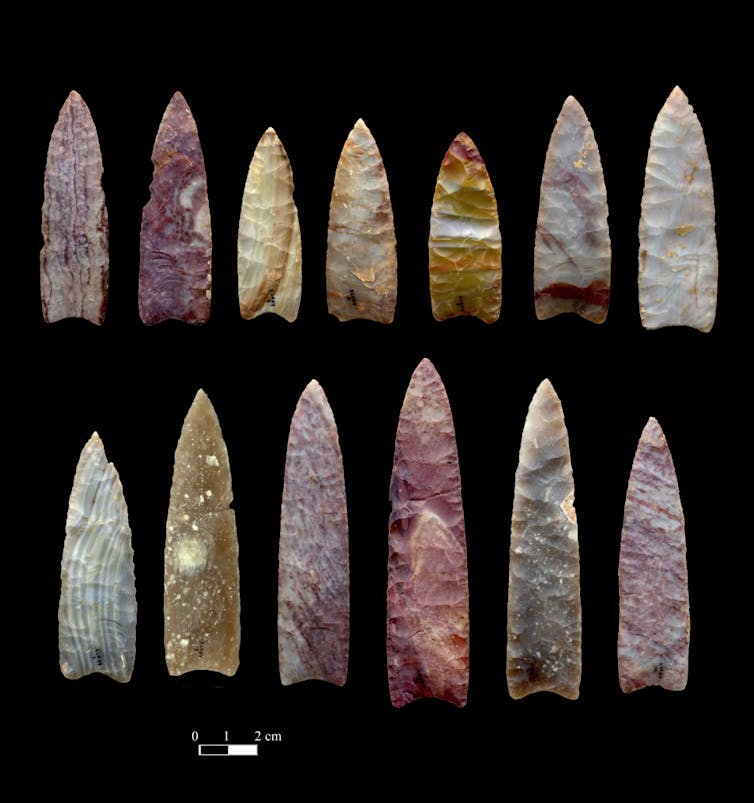
13,000-year-old spear points from Colorado.
Chip Clark, Smithsonian Institution
The answer lies inpopulation growth.
Humans reproduce exponentially, like all species.
Unchecked, we historicallydoubled our numbers every 25 years.
And once humans became cooperative hunters, we had no predators.
Warfare became a check on population growth, perhaps the most important one.
The end result, however, was just as final.
Yet the extinction of Neanderthals, at least, took a long time thousands of years.
Today we look up at the stars and wonder if werealone in the universe.
Its profoundly sad to think that we once did, and now, because of it, theyre gone.
