This is particularly true ofsolar-powered electricityandbattery storage.
Thepotential for future reductionsin the cost of electricity from silicon solar, for example, is limited.
The manufacture of each panel demands a fair amount of energy and factories areexpensive to build.
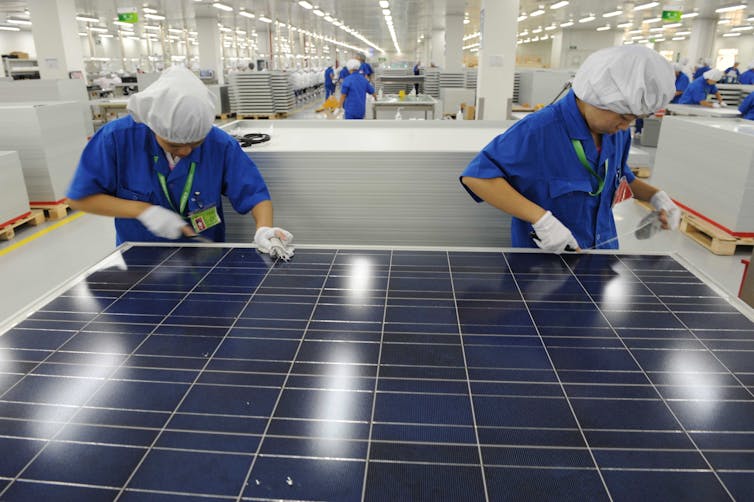
EPA/STR
40% off TNW Conference!
This is a problem, as lighting currently accounts for5%of the worlds carbon emissions.
New technologies are needed to fill this gap, and quickly.
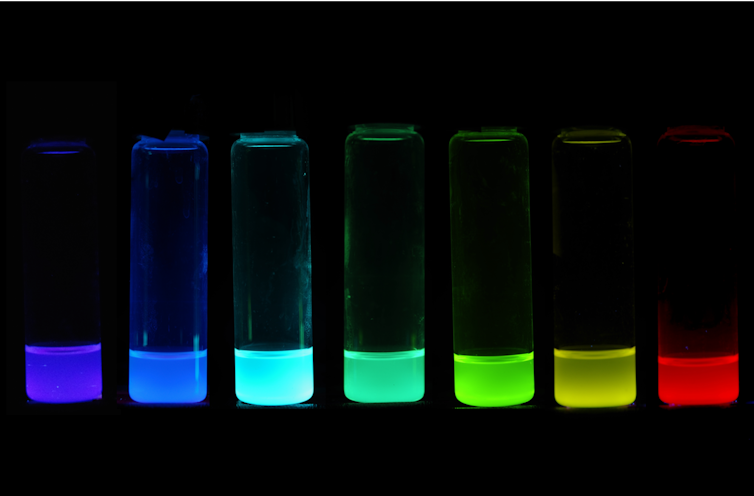
They are semiconductors, conducting charges when stimulated with light.
When sandwiched between electrode contacts, these films makesolar cells or LED devices.
Amazingly, the color of light they absorb or emit can be changed simply by tweaking their chemical structure.
These technologies arerapidly being commercialized, particularly on the solar cell front.
UK-based Oxford Photovoltaics hasbuilt a production lineand is filling its first purchase ordersin early 2021.
Polish company Saule Technologies released prototype products at the end of 2018, including aperovskite solar facade pilot.

Chinese manufacturer Microquanta Semiconductor expects to produce more than200,000 square metersof panels in its production line before year-end.
The US-based Swift Solar (a company I co-founded) is pioneeringhigh-performancecells with lightweight, flexible properties.
Betweenthese and other companies, there is rapid progress being made.
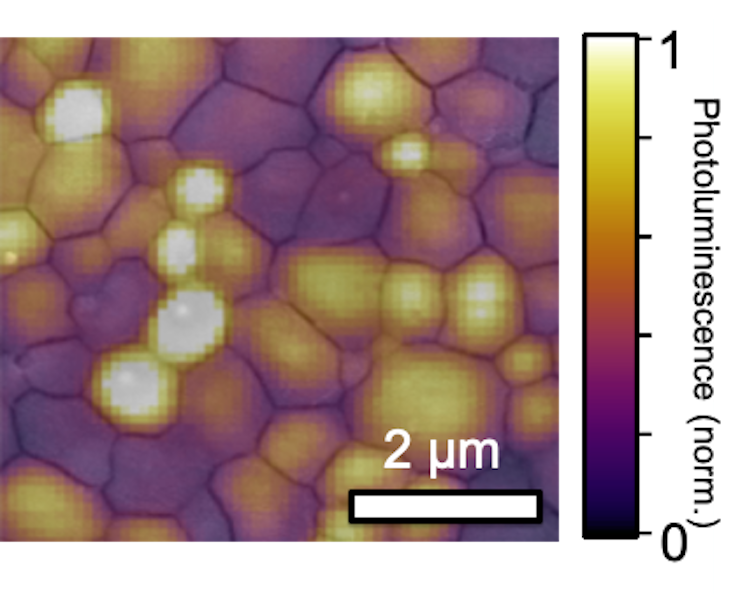
Whats more, small blemishes ordefectsin perovskite films do not lead to significant power losses.
Such defects would be catastrophic for a silicon panel or a commercial LED.
Light emitted from mosaic grains in a perovskite film.
But the real opportunity is to develop highly efficient cells beyond the efficiency of silicon cells.
For example, we can layer two different colored perovskite films together in atandem solar cell.
Each layer would harvest different regions of the solar spectrum, increasing the overall efficiency of the cell.
Lightweight, high-power solar also opens up possibilities for powering electric vehicles and communication satellites.
For LEDs, perovskites can achieve fantasticcolor qualitywhich could lead to advancedflexible display technologies.
Although the first products are already emerging, there are still challenges.
One key issue is demonstratinglong-term stability.
