Holy sharks, Batman, its periodic!
I exclaimed on Slack.
It was the first lockdown of 2021 in Perth, and we were all working from home.
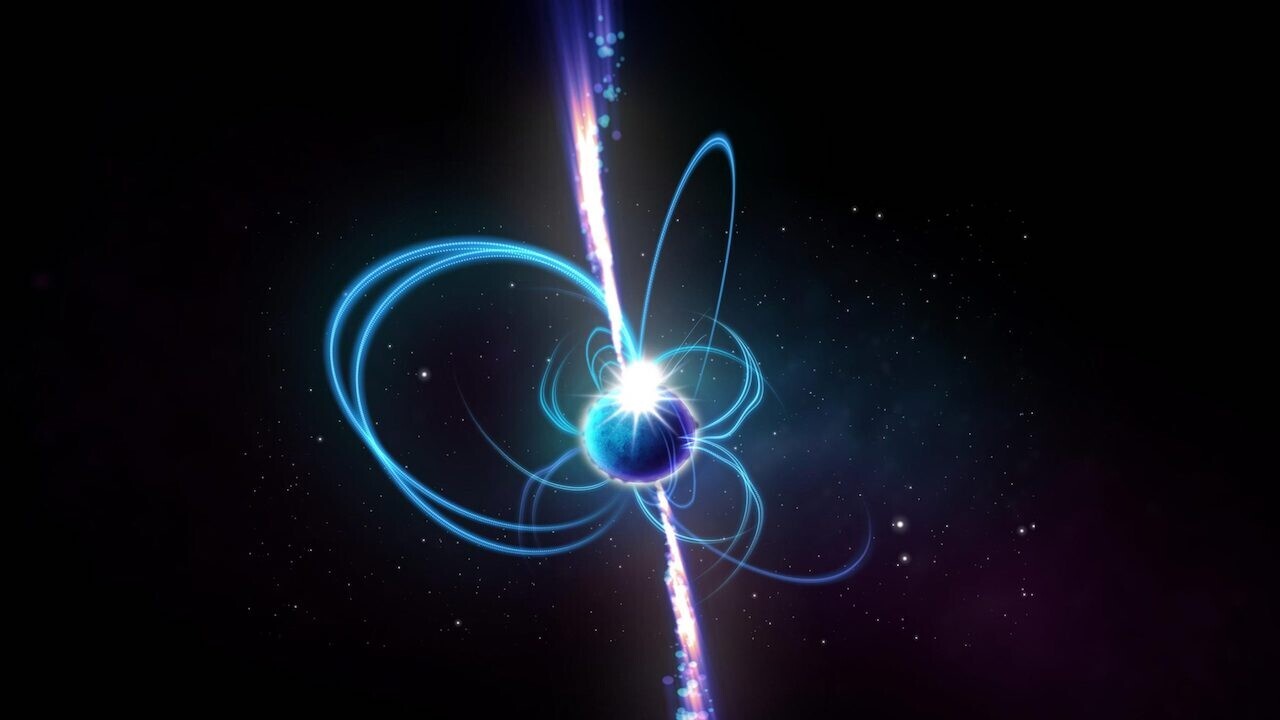
The sourcewas named GLEAM-X J162759.5-523504, after the survey it was found in and its position.
It’s free, every week, in your inbox.
Sources that appear and disappear are called radio transients and are usually a sign of extremephysicsat play.

So I looked at more data.
At this point, I broke out in a cold sweat.
There is a worldwide research effort searching for repeating cosmic radio signals transmitted at a single frequency.
Its called theSearch for Extra-Terrestrial Intelligence.
Was this the moment we finally found that the truth is …out there?
The plot thickens
I rapidly downloaded more data and posted updates on Slack.

This source was incredibly bright.
It was outshining everything else in the observation, which is nothing to sniff at.
The brightest radio sources are supermassive black holes flaring huge jets of matter intospaceat nearly the speed of light.
What had we found that could possibly be brighter than that?
Colleagues were beginning to take notice, posting:
Its repeating too slowly to be a pulsar.
But its too bright for a flare star.
(alien emoji icon)???
In fact, I could predict when they would appear to an accuracy of one ten-thousandth of a second.
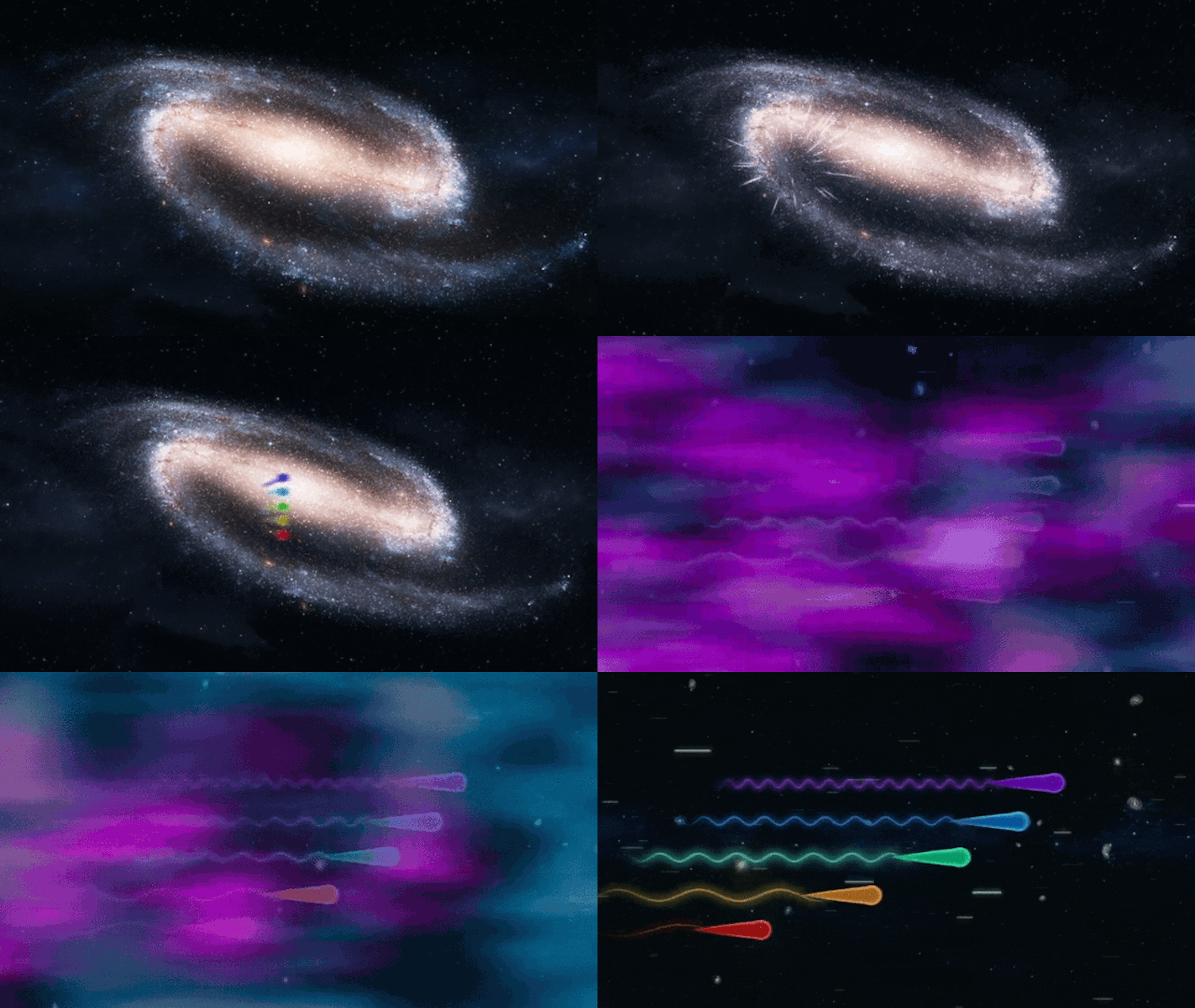
Our new discovery lies about 4,000 light-years away very distant, but still in our galactic backyard.
Interstellar space slows down long wavelength radio waves more than short.
ICRAR
We also found the radio pulses were almost completelypolarised.
In astrophysics, this usually means their source is a strong magnetic field.
Even so, no one expected one could be so bright.
This is the first time weve ever seen a radio source that repeats every 20 minutes.
But maybe the reason we never saw one before is that we werent looking.
I wasnt looking for sources repeating at 18-minute intervals an unusual period for any known class of object.
Nor was I searching for something that would appear for a few months and then disappear forever.
The universe is full of wonders, should we only choose to look.
This article byNatasha Hurley-Walker, Radio Astronomer,Curtin Universityis republished fromThe Conversationunder a Creative Commons license.
