Health tech has a rocky history.
For every story ofthe Apple Watch saving someones life, theres aTheranosout there ruining it for everyone.
Yet the sector marches on.
40% off TNW Conference!
Intrigued, I got in touch with Juuso Blomster, the companys CEO, to find out more.
Blomster is a clinical cardiologist by trade, having practised for close to 20 years.

The seed of CardioSignal was planted around 2011, a period he spent in Australia.
He tells TNW it was at this time he started to see wearables first make waves.
This sort of technology with the Fitbit as a prime example was steadily gaining popularity.
They realised they could achieve great things with this technology and data.
What exactly is CardioSignal?
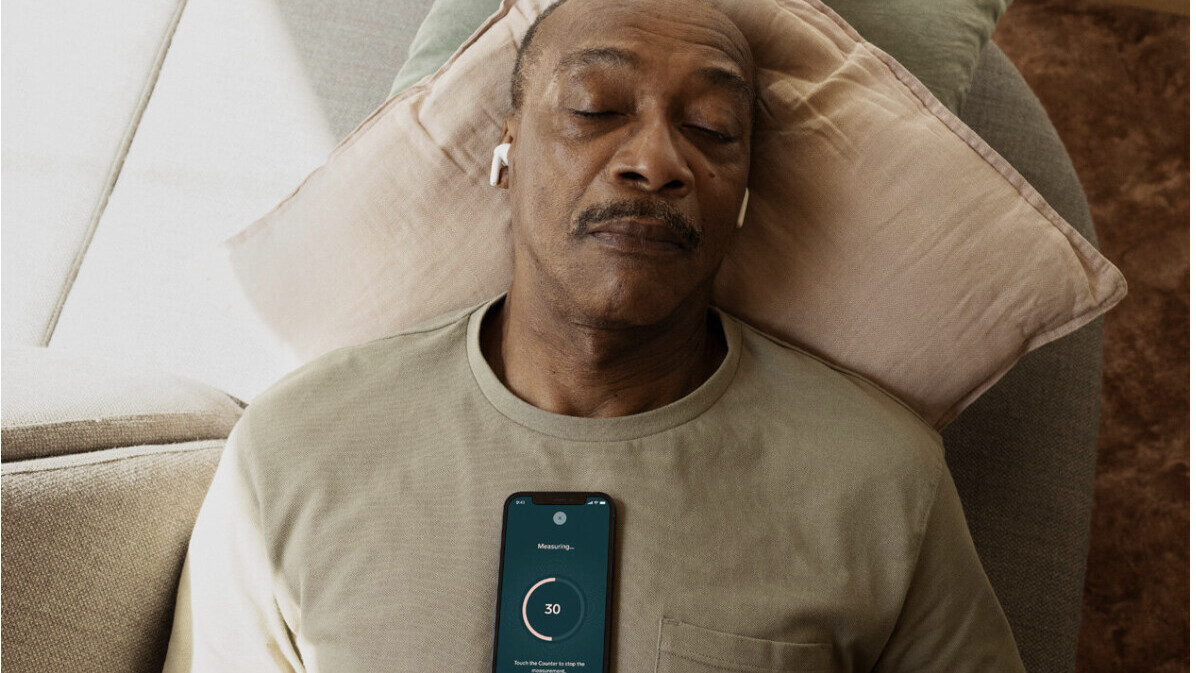
Effectively, CardioSignal is an app you load on your phone.
After a minute, this data is sent to a secure cloud service for analysis.
But is this like the heart monitoring tech in many smartwatches?
Useful for broad understanding, but clinically useless?
In other words, its the real deal.
CardioSignals is the first tech validated to detect heart disease without the need for specialised equipment.
The market has taken notice.
Currently, the app and gadget only detects atrial fibrillation (AFib).
While this is the most common cardiac rhythm disorder, its not something the company is alone in tracking.
When I put this to Blomster, he pointed to a range of benefits CardioSignals technology has over wearables.
The key benefit is it can directly measure your heart, he says.
As it literally sits on a users chest, its able to directly read the hearts rhythm.
A lot of things can happen in between, Blomster says.
Beyond this, a phone can deliver a lot more information.
Generally, smartwatches use a single channel of data: the pulse of an optical sensor.
When a heart pumps theres rotation and twist, Blomster says.
CardioSignals next steps
Blomster tells me theres ongoing clinical validation for a range of other ailments too.
There are some downsides to the tech though.
This is a tradeoff CardiSignal deliberately made, wanting to make its heart monitoring tech as accessible as possible.
To find out more about this trend, we spoke with Varun Mishra, a senior analyst atCounterpoint Research.
This trend is rippling across the industry, with other medical devices getting increasingly smart.
Whats on the health tech horizon?
Of course, there are dangers to this.
The easier it is for us to access all our data, the easier it is for hackers too.
Still, this feels like a small risk considering the broad upside of smartphone-based health applications.
And, it is something thatalmost the entire globecan benefit from.
And, in this rare instance, it seems that smartphones could actually be good for society.
