Explaining consciousness is one of the hardest problems in science and philosophy.
I first saw video feedback in the late 1980s and was instantly entranced.
Then the camera was tilted slightly and the tunnel blossomed into a pulsating organic kaleidoscope.
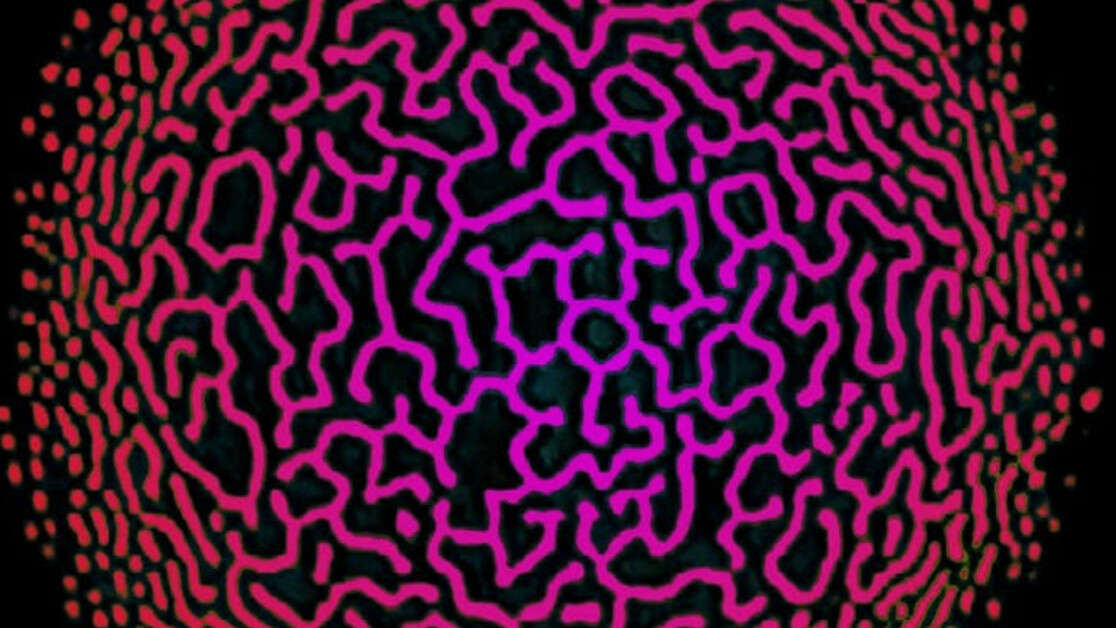
Video feedback is a classic example ofcomplex dynamical behaviour.
It arises from the way energy circulating in the system interacts chaotically with the electronic components of the hardware.
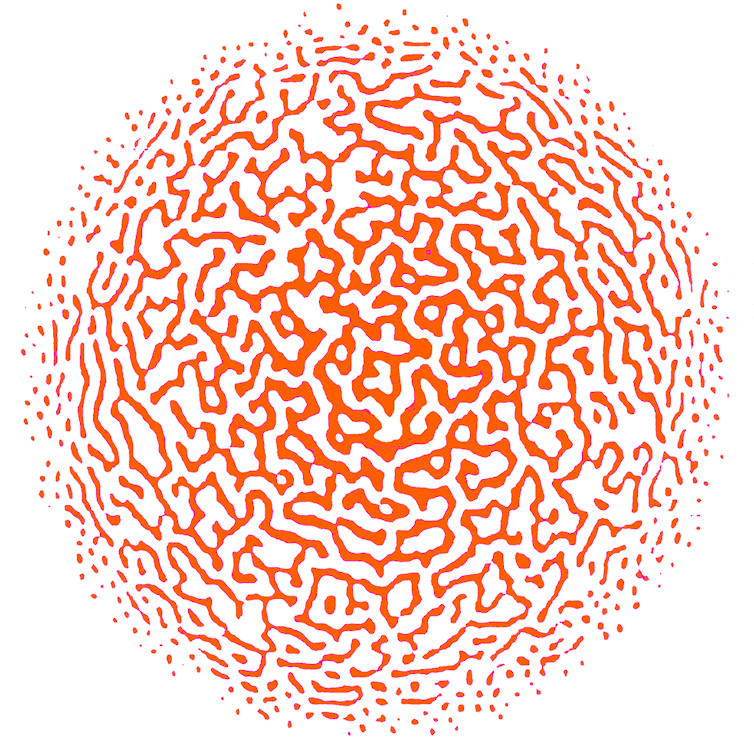
But it was a memorable if unnerving experience during an LSD-induced trip that got me thinking.
I hallucinated almost identical imagery, only intensely saturated with colour.
It struck me then there might be a connection between these recurring patterns and the operation of the mind.
But a widely accepted scientific theory of consciousness remains elusive.
I doubt this claim for several reasons.
First, there is little agreement among scientists about exactly what information is.
Brains,I argue, are not squishy digital computers there is no information in a neuron.
Brains processenergy, not information.
Recognising that brains are primarily energy processors is the first step to understanding how they support consciousness.
The next is rethinking energy itself.

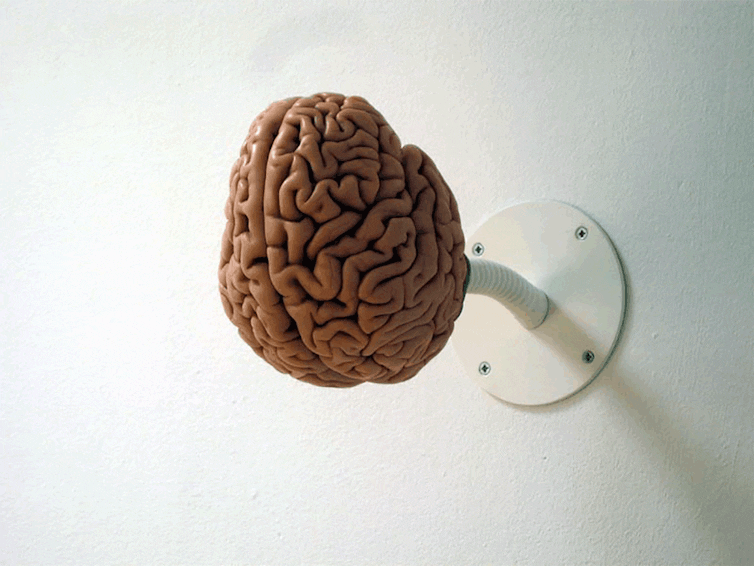
Is the human brain a squishy digital computer or a delicate organic instrument for processing energy?
Installation shot of I am a brain, 2008.
Cast of human brain in resin and metal.
Robert Pepperell
What is energy?
We are all familiar with energy but few of us worry about what it is.
Even physicists tend not to.
They treat it as an abstract value in equations describing physical processes, and that suffices.
This conception of energy as actualised difference, I think, may be key to explaining consciousness.
The brain is expensive to run.
Researchers recently discovered a way to accurately index the amount of consciousness someone has.
Theyfired magnetic pulsesthrough healthy, anaesthetised, and severely injured peoples brains.
Then they measured the complexity of an EEG signal that monitored how the brains reacted.
The complexity of the EEG signal predicted the level of consciousness in the person.
And the more complex the signal the more conscious the person was.
The researchers attributed the level of consciousness to the amount of information processing going on in each brain.
Also relevant is evidence from studies ofanaesthesia.
No-one knows exactly how anaesthetic agents annihilate consciousness.
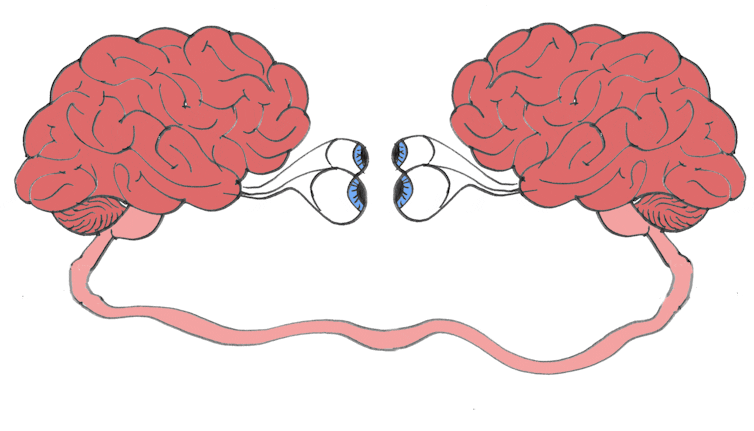
These are recursive feedback loops of neural activity that bind distant brain regions into a coherent functioning whole.
Video feedback may be the nearest we have to visualising what conscious processing in the brain is like.
Still from video feedback sequence.
Robert Pepperell, Professor,Cardiff Metropolitan University
This article is republished fromThe Conversationunder a Creative Commons license.
