NASAs Apollo programme was one of the most challenging technological achievements in the 20th century.
But at the same time, there are several myths regarding what technologies actually came out of it.
My favourite myth is thatTeflon was developed by NASA.

This seems reasonable, as it is animmensely heat resistant material something that space missions require.
However, it wasinvented by accident in 1938byRoy Plunkettat DuPont when he was researching new refrigerants.
Velcro isanother misconception, having beeninvented in the 1940sin Switzerland by George de Mestral.
Again, its huge usefulness in everyday life in space cant be denied.
Imagine how tricky it would be to secure yourself to your bed to sleep without any gravity.
Here is a list of some developments but there are many others too.

Water purification
NASA developed a small, lightweight unit that purified water for human space flight.
Thisworked reliablywithout needing dedicated monitoring and used silver ions (atoms that have lost electrons) to kill bacteria.
It also removes the problems of stinging eyes and bleaching we all notice in swimming pools.
40% off TNW Conference!
Breathing masks
Breathing systems used by firefighter across the world have their origins in NASA.
Although NASA themselves did not invent them, they were responsible for making them usable light and efficient.
US chemistCarl Marvelfirst synthesizedthe polymer fabricPolybenzimidazolein the 1950s.
The tragic event became a wake-up call for NASA.
Itfound its way into the fire servicesof the US in the 1970-80s to enhance their protective clothing.
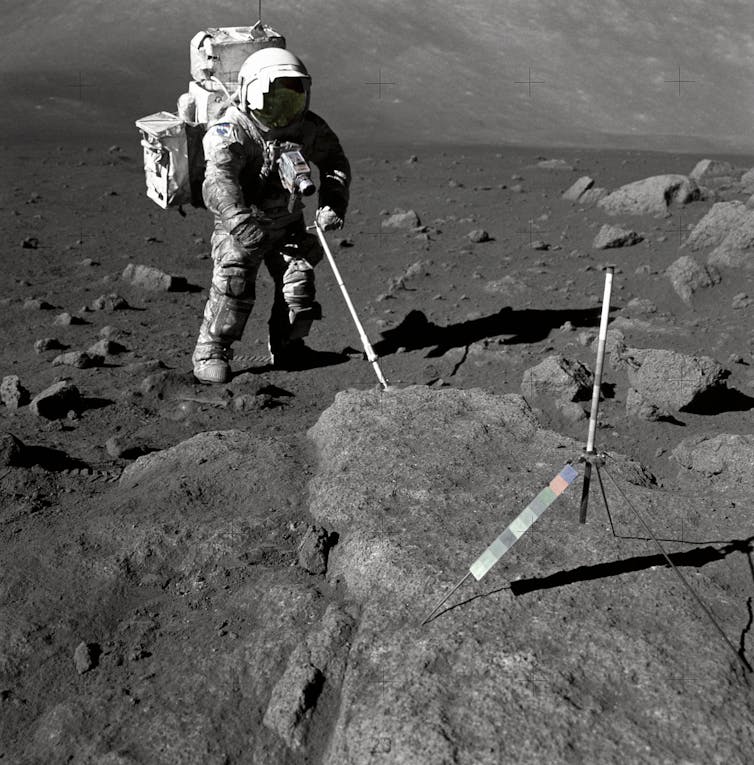
For that, they needed efficient cordless drills.
Luckily, the company Black & Deckerhad developed some crude productsalong these lines in 1961.
Harrison Schmitt trying to collect moon rock.
So NASA helped initiate important innovation of cordless devices feeding its experience into medical devices and vacuum cleaning.
This article is republished fromThe ConversationbyDaniel Brown, Lecturer in Astronomy,Nottingham Trent Universityunder a Creative Commons license.
