TheResearch Briefis a short take about interesting academic work.
Fast radio bursts, or FRBs, are extremely bright pulses of radio waves that come from faraway galaxies.
They release as much energy in a millisecond asthe Sun does over many days.
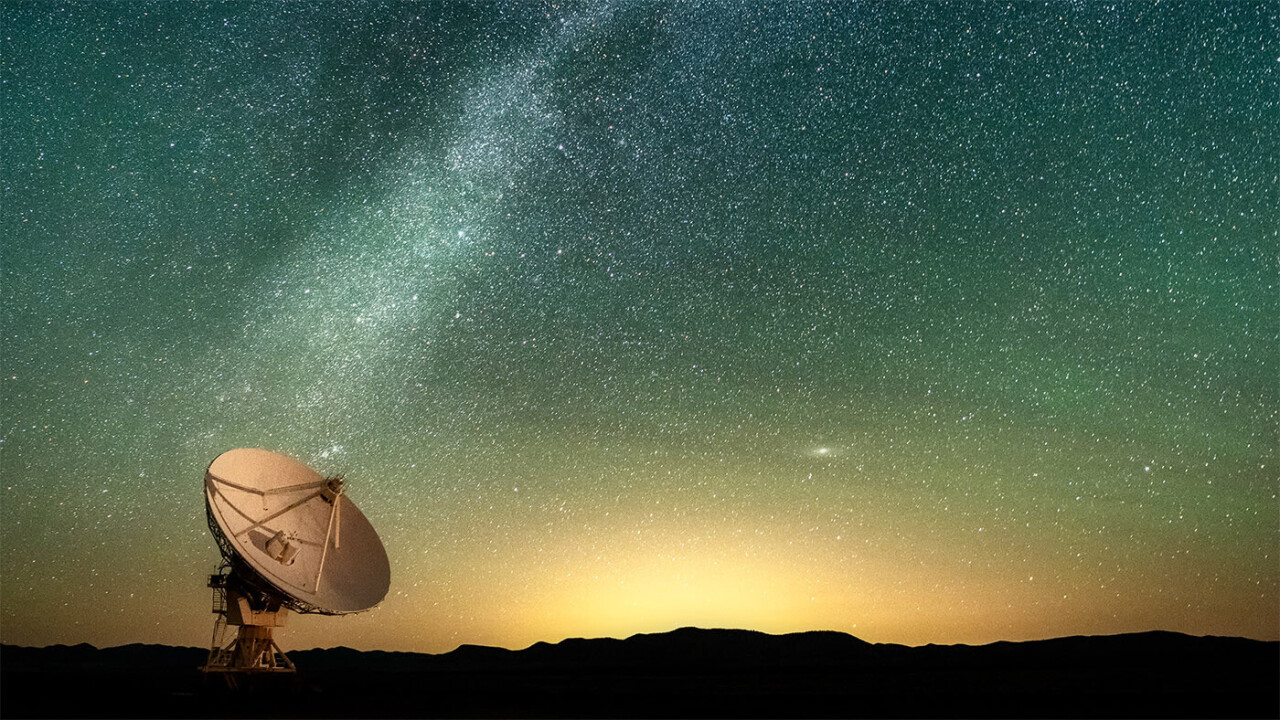
Researchers here at West Virginia Universitydetected the first FRB back in 2007.
In the past 15 years, astronomers have detected around 800 FRBs, withmore being discovered every day.
Dispersion is basically a measure of how stretched out an FRB is when it reaches Earth.

This allows researchers touse dispersion to estimate how far from Earth an FRB originated.
It’s free, every week, in your inbox.
The top of this diagram show six spikes in radio wave brightness that are six bursts from FRB190520.
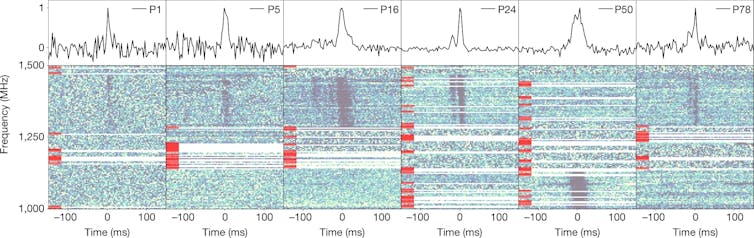
The bottom half shows the frequency range for each individual burst.
We found it using theFive-hundred-meter Aperture Spherical Telescopein China.
It was then that we started to realize how truly unique and important this FRB is.
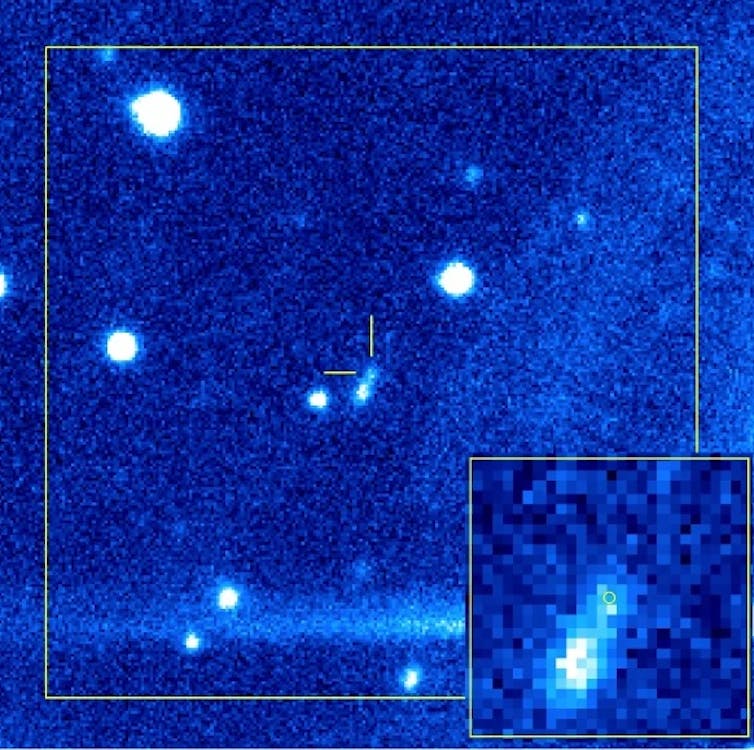
Of the more than800 FRBs discovered to date, only one other has a similar persistent radio signal.
But this result didnt make sense.
And a huge mystery is why the dispersion of FRB190520 was so much greater than it should be.

Was it due to something near the FRB?
Was it related to the persistent radio source?
Does it have to do with the matter in the galaxy where this FRB comes from?
All of these questions are unanswered.
More answers will come from other FRB discoveries in the coming years, too.
