Risingexplores how machines could fulfill desires and support humans during space travel.
Lo and behold, it might contain the solution to problems related to space exploration.
Astronauts, despite their rigorous training, remain humans with needs.
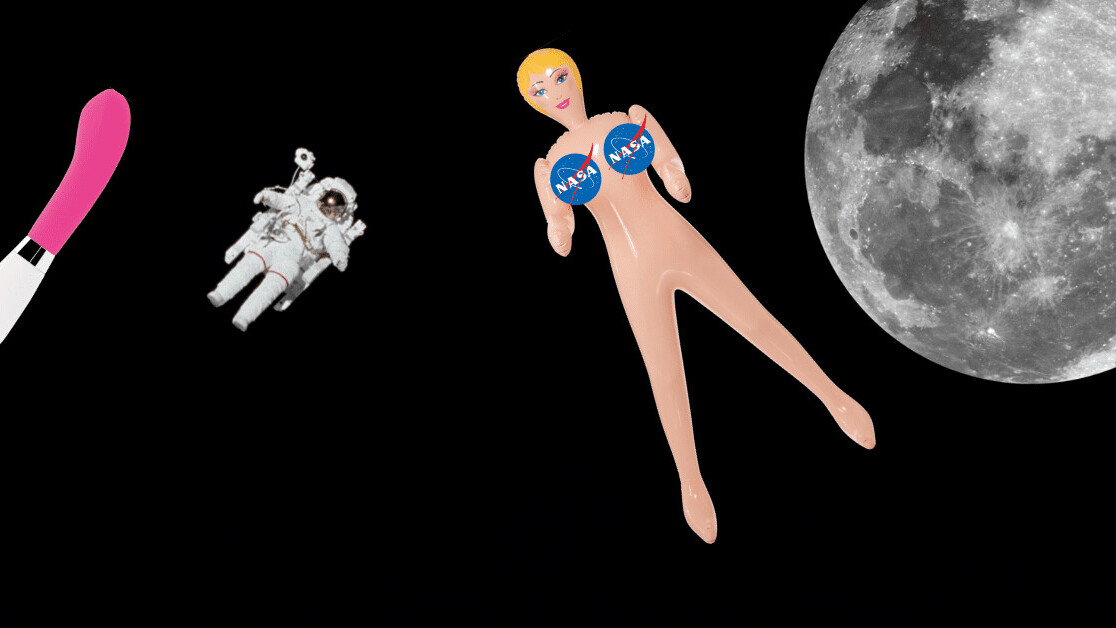
Can humans thrive for prolonged periods of time in small groups and in closed, isolated environments?
Can humans contend with limited possibilities of relationships, intimacy and sexuality?
Sex tech might have the answer.
40% off TNW Conference!
One of them is tomake the space journey human compatible, that is, physically and psychologically viable.
Given thatintimacy and sexuality are basic needs, they become central issues for human-space compatibility.

How will humans have sex in space?
Can we propagate the species beyond Earth?
What will intimate relationships look like aboard spaceships and settlements?

Either sex in space hasnt happened, or no one is talking about it.
Nonetheless, imminent prolonged human missions tothe moonandMarsraise concerns regarding the future of intimacy and sexuality in space.
In the very near future, human missions will only include small crews and settlements.
For instance, it might be difficult to find partners that fit our personality, preferences and sexual orientation.
Yet NASA seems afraid oftackling issues of intimacy and sexuality in space.
If thats your specific topic, theres nothing to discuss.
Givenwhat we know about human sexuality, this position seems irresponsible.
It prevents research from examining basic questions about sexual health and well-being in space.
For instance, how do we deal with hygiene and the messiness of human sex in zero-gravity?
Is imposed abstinence a reasonable solution, based on empirical evidence?
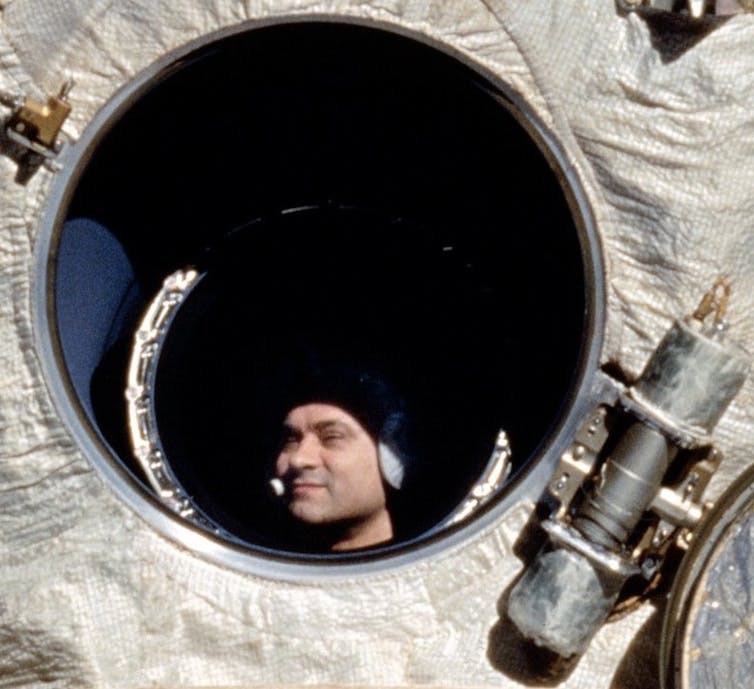
Russian cosmonaut Valeri Polyakov holds the record for the longest spaceflight.
Polyakov spent 438 days in space, returning to Earth on March 22, 1995.
But sex toys do not address the social dimensions of human erotic needs.
This is where erobots come in.
The term erobots characterizes all virtual, embodied and augmented artificial erotic agents and the technologies that produce them.
Examples include sex robots, erotic chatbots and virtual or augmented partners.
Erobotics is the emerging transdisciplinary research studying human-erobots interactions and related phenomena.
Erobots represent a practical solution to tackle the inhuman conditions of space exploration and colonization.
Erobots could provide companionship and sexual pleasure to crew members and settlers.
Beyond the capabilities of sex toys, erobots can incorporate social dimensions into erotic experiences.
They could help with loneliness and the inevitable anxieties borne out of solitude.
They could act as surrogate romantic partners, provide sexual outlets and reduce risks associated with human sex.
Erobots could also provide intimacy and emotional support.
Erobots can take many forms and be made of light material.
The same technology could also be employed to enact erotic experiences with loved ones back on Earth.
Addressing human desire, intimacy and reproduction will increase in importance as we move towards space colonization.
Erobotics can contribute to space research programs.
And ultimately, we must shed our taboos regarding technology and sexuality as we journey to the final frontier.
