Think for a second: compared to your grandparents and parents, what do you actuallyownoutright?
This seems to be the new mantra, where nothing is permanent but everything is convenient.
This is the era of the digital nomad, and consequently, its also the era of the digitalserf.
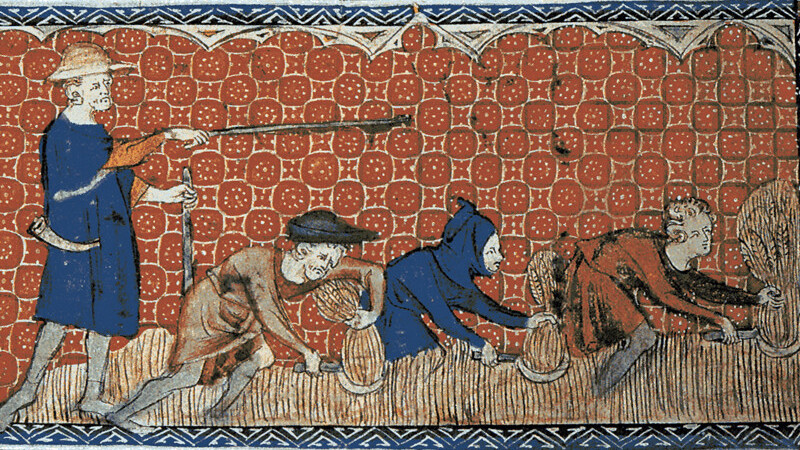
Today, the labor is largely data, and the properties are digital.
Before we dive into digital serfdom, lets take a look at what is actually happening now.
The percentage of households without a car isincreasing.

Ride-hailing services have multiplied.
Spotify gainsten millionpaid members every five to six months.
The model of impermanence has become the new normal.
If its not on social media, it may as well have never happened.
It’s free, every week, in your inbox.
Its turning the publics perception of the true nature of the social contract they signed up for upside down.
Worryingly though, it hasnt really affected Facebookuser numbers or engagement levels.
Our digitally enhanced lives have put tracking dots on each of us.
On every website we visit, our clicks and actions are data thats mined without our knowledge.
Over3.7 billionhuman beings use the internet today and the ways we use it are increasingly personal.
We shop, bank, and store photos.
We use search for just about everything and GPS to get almost everywhere.
(Full disclosure: Ive done it too!)
Nothing is free
The problem isnt an online quiz about cats or our digital lifestyle.
The problem is that we are sliding back into a feudal system while barreling into the future.
By not paying attention to the first law of economics nothing in life is free.
By doing so, we have once again become serfs.
In this case, our serfdom means tilling adigitalfield.
In our digital-dependent world, what other option is there?
And the thought ofnotbacking up your important documents to the cloud seems irresponsible.
Its all about giving you perks to access your payment data.
In the developed world, we think little of this.
We are used to having monetary transactions go through intermediaries, so people tolerate transaction fee friction.
Interestingly, it is the emerging economies that may be the first to experience some freedom from this.
A majority of these people are in developing nations.
Exciting and liberating, most certainly, but early technology is not without its problems.
Miners exploited this cryptocurrency five years ago and its actually neither private nor efficient.
Due to mining, Bitcoin consumes an exorbitant amount of energy.
In fact, the energy used mining bitcoinin 2017 surpassedthe energy consumption of Ireland and most African nations.
Furthermore, its not private at all.
The data is stored on a public, unchangeable ledger.
Most blockchainsare not actually decentralized.
That was not the initial pure design intent.
Technology is continuing to evolve as is the nature of trust.
This allows for localized ownership of your digital assets.
This puts control and privacy back into your hands.
Know your value and value what you own.
Story byHassan Khan
Hassan is CEO of TODAQ Financial and Quantius.
TODAQ Financial is a platform that allows P2P value transfer and individually managed asset possession, enabled byTODAblockchain protocol.
