We want to know what others think before we make that choice.
Humans are social animals.
Humans copy each other every day.
And then you might share that information, perhaps posting a review on social media.
So sometimes social learning can improve our decision making.
Learning together
40% off TNW Conference!
This can be useful in areas such as management, product development and predicting elections.
However, the opposite can also be true.
Why do groups of humans sometimes exhibit collective wisdom and at other times madness?

Can we reduce the risk of maladaptive herding and at the same time increase the possibility of collective wisdom?
Understanding this apparent conflict has been alongstanding problemin social science.
So how can social learning improve our decision making?
Striking the right balance between copying others and relying on personal experience is key.
Yet we still need to know exactly what the right balance is.
Smart flexible bees
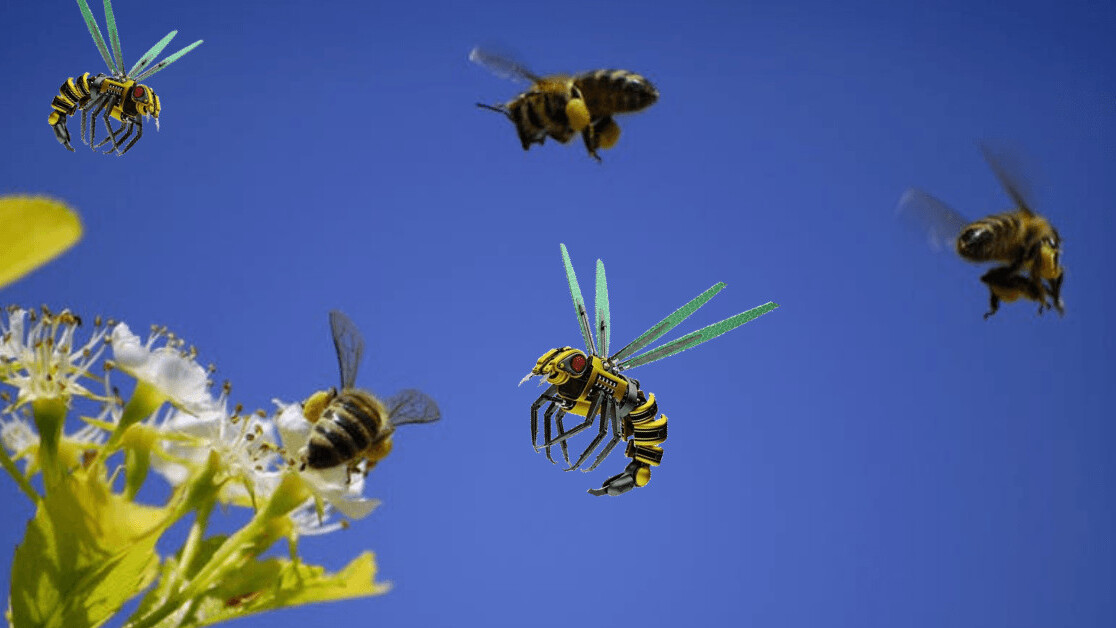
Humans are not the only animals to display collective intelligence.
Bees are also well known for their ability to makeaccurate collective decisionswhen they search for foods or new nests.
Whats more, bees can avoid maladaptive herding.
Bees prevent bad information from becoming viral, although they copy each other through communication and social learning.
But how do they do it?
In short, these waggle dances are bee versions of online shopping rating systems.
Instead of stars or good reviews, bee ratings are based on the duration of the dance.
When a bee finds a good source of food, it dances for a long time.
When it finds a poor one, the duration of the dance is short or non-existent.
The longer the dance, the more bees follow its suggestion to feed there.
Collective flexibility is key.
To examine this, we developeda mathematical modelthat was inspired by collective honey bee foraging behavior.
We launched a simple online game as a psychology experiment.
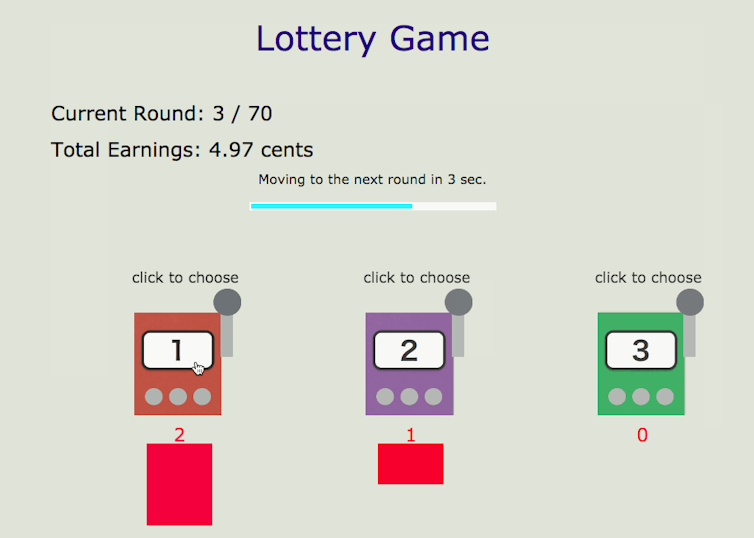
Participants had to repeatedly choose one of three slot machines.
One slot could drop more money than the others, but players didnt know which one at the outset.
The mission was to identify the best slot and win as much money as possible.
Then they could copy or ignore the choices of the others.
The results revealed that a challenging task elicited greater conformity and the copying increased with group size.
We should take account of not just the most popular opinion, but also other minority opinions.
In thinking this way, the crowd can avoid maladaptive herding behavior.
This research could inform how collective intelligence is applied to real-world situations, including online shopping andprediction markets.
Stimulating independent thought in individuals may reduce the risk of collective madness.
There is much we can learn from the humble bee.
