Its not the first time earthquakes have caused mass destruction and death in Indonesia.
The tsunamis that follow are particularly damaging.
It’s free, every week, in your inbox.
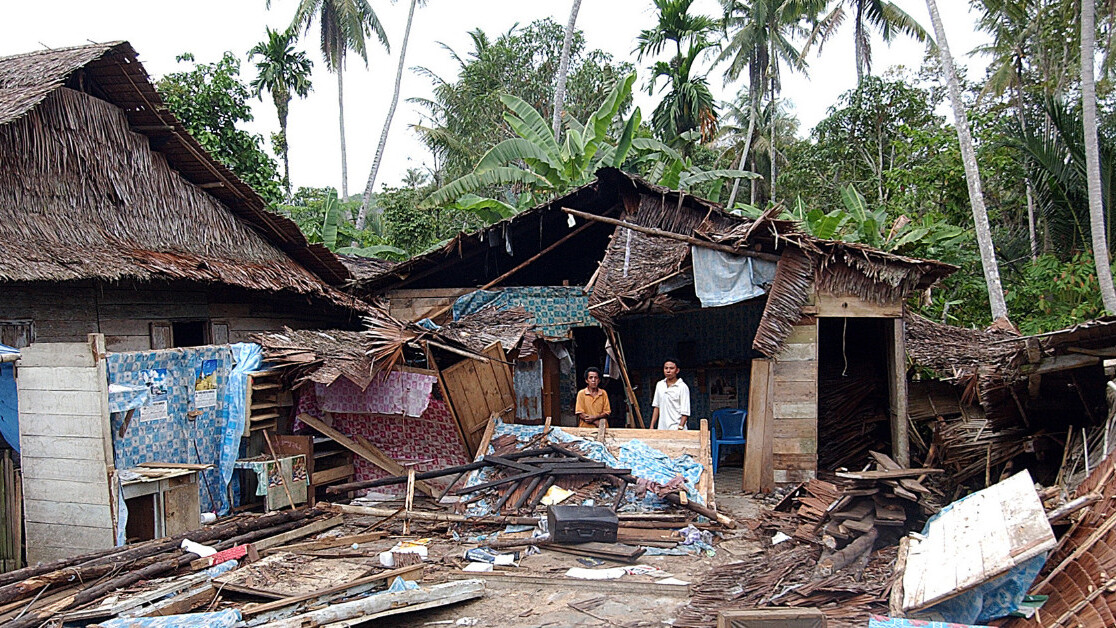
Indonesia covers many complex tectonic environments.
Many details of these are still poorly understood, which hampers our ability to predict earthquake and tsunami risks.
The biggest earthquakes on Earth are subduction zone earthquakes, which occur where two tectonic plates meet.

But only looking out for these kinds of earthquakes can blind us to other dangers.
It is rare although not unknown for these kinds of quakes to create tsunamis.
The fault systems are rather large, and through erosion processes have created broad river valleys and estuaries.
Studies ofprehistoric earthquakesalong this fault system suggests this fault produces magnitude 7-8 earthquakes roughly every 700 years.
This determines the speed of the initial waves.
As the water has momentum, it may fall below sea level and create strong oscillations.
Tsunami waves can travel very fast, reaching the speed of a jet.
When the wave approaches the shallower coast, its speeddecreasesand the heightincreases.
A tsunami may be 1m high in the open ocean, but rise to 5-10m at the coast.
Very steep land, above or below water, can even bend and reflect waves.
The coastlines of the Indonesian archipelago are accentuated, in particular in the eastern part and especially at Sulawesi.
In reality, this is a rather complex problem.
Hawaii and Japan have sophisticated and efficient early warning systems.
After the 2004 Indian Ocean disaster, international efforts were made to improve tsunami warning networks in the region.
However, financing and supporting the early warning system in the long term is a considerable problem.
The buoys alone cost around US$250,000 each to install and US$50,000 annually for maintenance.
Lastly, the Palu tsunami event has highlighted that our current tsunami models are insufficient.
They do not properly consider multiple earthquake events, or the underwater landslides potentially sparked by such quakes.
No early warning system can prevent strong earthquakes.
Tsunamis, and the resulting infrastructure damage and fatalities, will most certainly occur in the future.
This article is republished fromThe ConversationbyAnja Scheffers, Professor,Southern Cross Universityunder a Creative Commons license.
