Why did we take so long to invent civilization?
ModernHomo sapiensfirst evolved roughly250,000 to 350,000years ago.
For 95 percent of our species history, we didnt farm, create large settlements or complex political hierarchies.

We lived in small, nomadic bands, hunting, and gathering.
Then, something changed.
We transitioned from hunter-gatherer life to plant harvesting, then cultivation and, finally, cities.
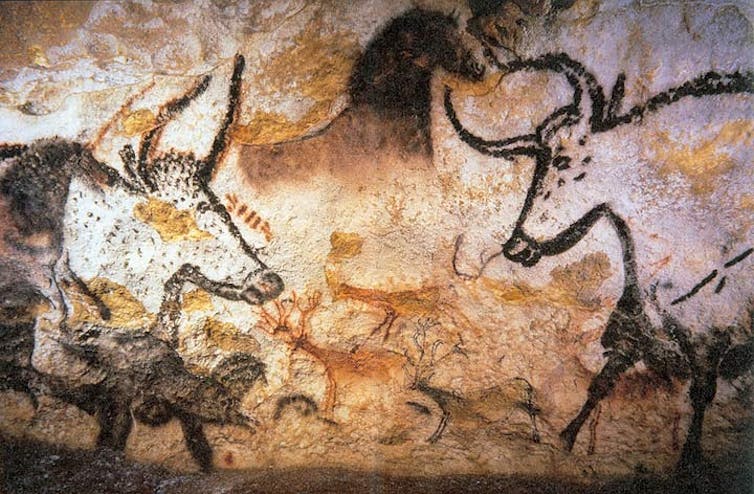
Humans hunted wild cattle, horses, and deer in France 17,000 years ago.
Wikipedia
Early humans were smart enough to farm.
If our ancestors didnt grow plants, its not that they werent clever enough.

Something in the environment prevented them or they simply didnt need to.
40% off TNW Conference!
Warmer temperatures, longer growing seasons, higher rainfall, andlong-term climate stabilitymade more areas suitable for cultivation.
But its unlikely farming had been impossible everywhere.
Climate change cant have been the only driver.
Human migration probably contributed as well.

But people occupied these parts of the world long before farming began.
Plant domestication lagged human migration by tens of millennia.
Rye, one of the first crops.

Agriculture has significant disadvantages compared to foraging.
Farmingtakes more effort and offers less leisure time and an inferior diet.
If hunters are hungry in the morning, they can have food on the fire at night.
Farming requires hard work today to produce food months later or not at all.
It requires storage and management of temporary food surpluses to feed people year-round.
Agriculture has many disadvantages overhunting.
Wikipedia
Agriculture has military disadvantages as well.
Hunter-gatherers are mobile and can travel long distances to attack or retreat.
Constant practice with spears and bows made themdeadly fighters.
Farmers are rooted to their fields, their schedules dictated by the seasons.
They are predictable, stationary targets, whose food stockpiles tempt hungry outsiders.
And having evolved to the lifestyle, humans may simply have loved being nomadic hunters.
The Comanche Indiansfought to the deathto preserve their hunting lifestyle.
The Kalahari Bushmen of southern Africacontinue to resistbeing turned into farmers and herders.
Hunting abandoned
Yet something changed.
From 10,000 years ago onward, humans repeatedly abandoned the hunter-gatherer lifestyle for farming.
As humans left Africa to colonize new lands, large animals disappeared everywhere we set foot.
In Australia, giant kangaroos and wombats disappeared46,000 years ago.
Megafaunal extinctions inevitably followed humans.
Harvesting big game likehorses, camels, andelephantsproducea better returnthan hunting small game like rabbits.
It was arguably the first sustainability crisis.
With our hunting prey gone, we were forced to invent civilization.
This let human populations expand.
People could settle permanently, build settlements, then civilizations.
Agriculture was desperate attempt to fix things when we took more than the ecosystem could sustain.
