And the usual confusion sets in, is it an hour forwards or back?
Why do we need to change the time at all?
Indeed, EU member stateshave been askedif they would like to simply skip daylight saving time.
But how has time-telling progressed throughout history and how good can it get?
40% off TNW Conference!
Using a sundial, you determine the local solar time at your geographical location.
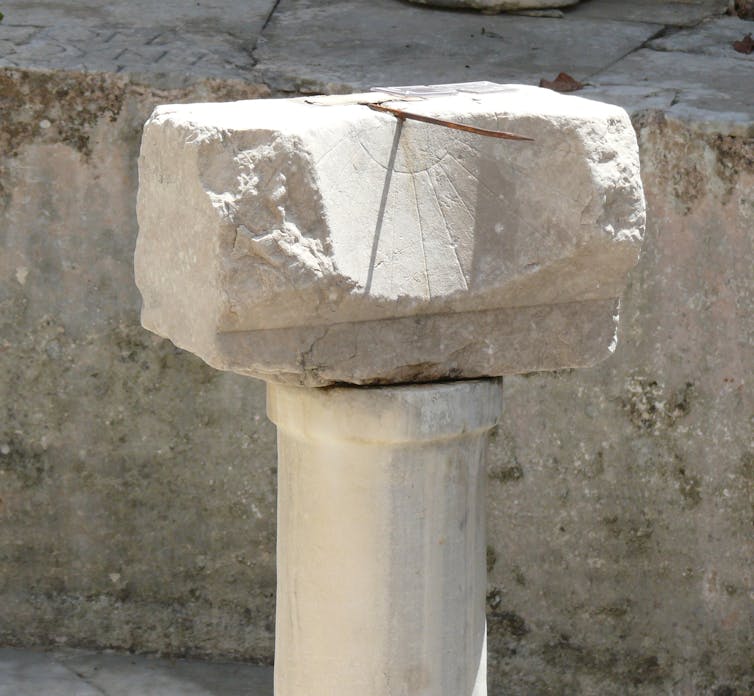
This varies a lot given that the Earth is a sphere.
As a result, longitude becomes important when comparing such times.
Even in the United Kingdom this difference amounts to 40 minutes when comparing the furthest locations east to west.
To ensure you knew when to expect a train, timetables needed to refer to a single time.
This idea developed further to create the now well-establishedtime zones.
But the time zones seem to have been drawn up rather randomly in some parts of the world.
This results mostly from the idea of unifying times in common trading and political regions.
Spain adopted the central European time during World War IIunder Francos regimeto align the country closer to Germany.
This remains today, despite the fact that the country covers exactly the same longitudes as the UK.
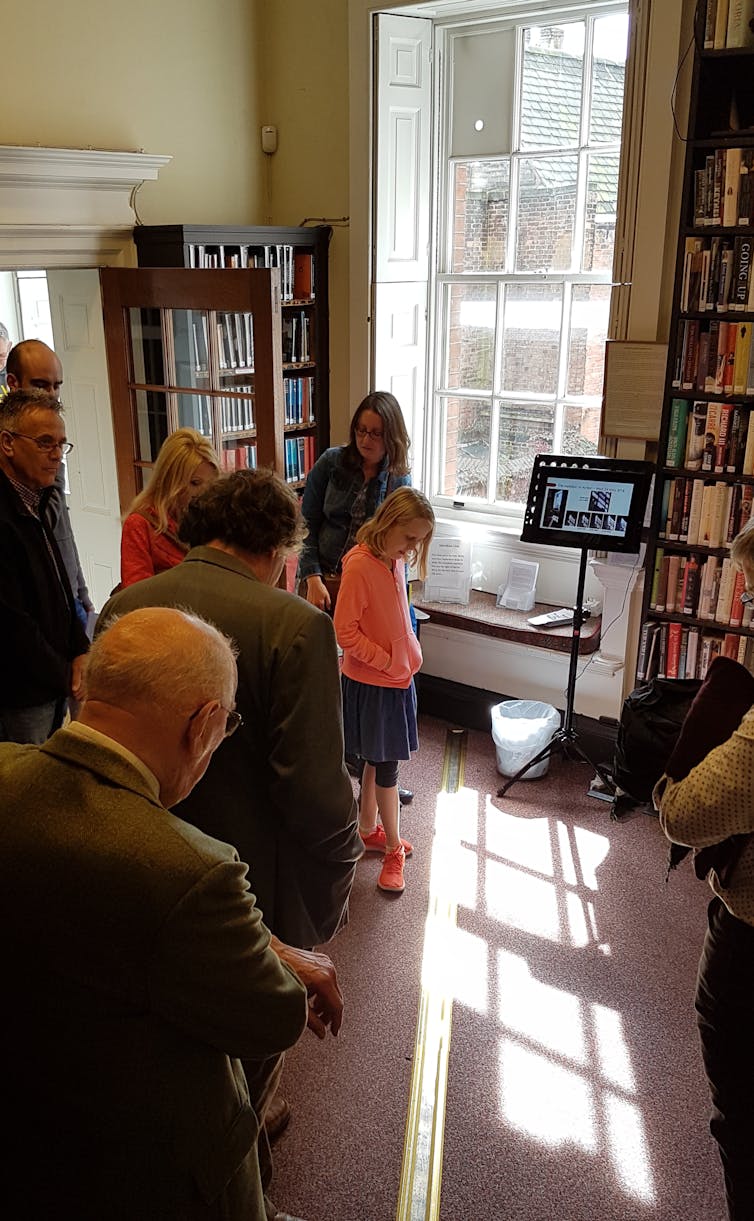
The sun was also long used to set clocks.
If the line is crossed, it is local solar noon.
One of the three surviving UK meridian sundials at the Nottingham Bromley House library which was built before 1834.
However, even this ingenious method needed correction.
The sun does not appear to move at a constant speed across the sky.
The offset between these two times is captured by what is termed theequation of time.
Today we can use GPS to do it.
This marks aslow mismatchbetween the time measured by atomic clocks and the mean solar time at Greenwich.
Leap seconds are introduced either at the end of June or December as they are needed.
This checking of the clocks is carried out byThe International Earth Rotation and Reference Systems Service.
This means relying purely on atomic clocks isnt sustainable.
And perhaps its good to continue thinking of time as relative.
This article is republished fromThe ConversationbyDaniel Brown, Lecturer in Astronomy,Nottingham Trent Universityunder a Creative Commons license.
