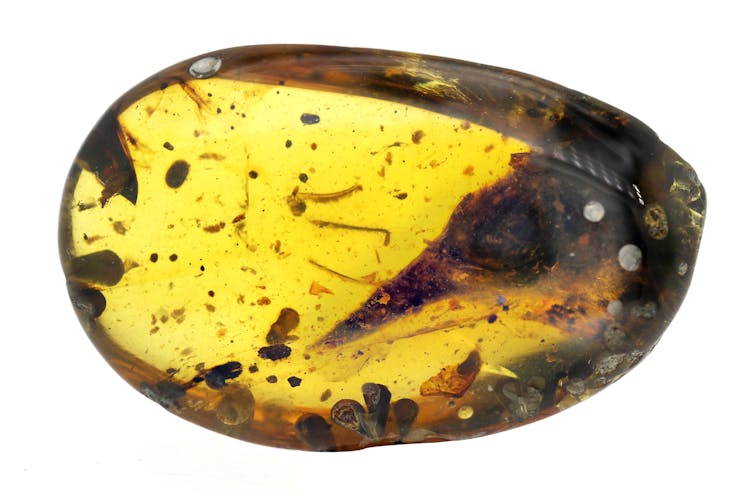
The head of a flying dinosaur that is hardly bigger than a bee hummingbirdhas been discoveredin 99-million-year-old amber.
The skull looks remarkably bird-like and a number of features suggestOculudentavisis related to the early ancestors of modern birds.
The fossil also appears to have preserved some of the dinosaurs original bodily material.
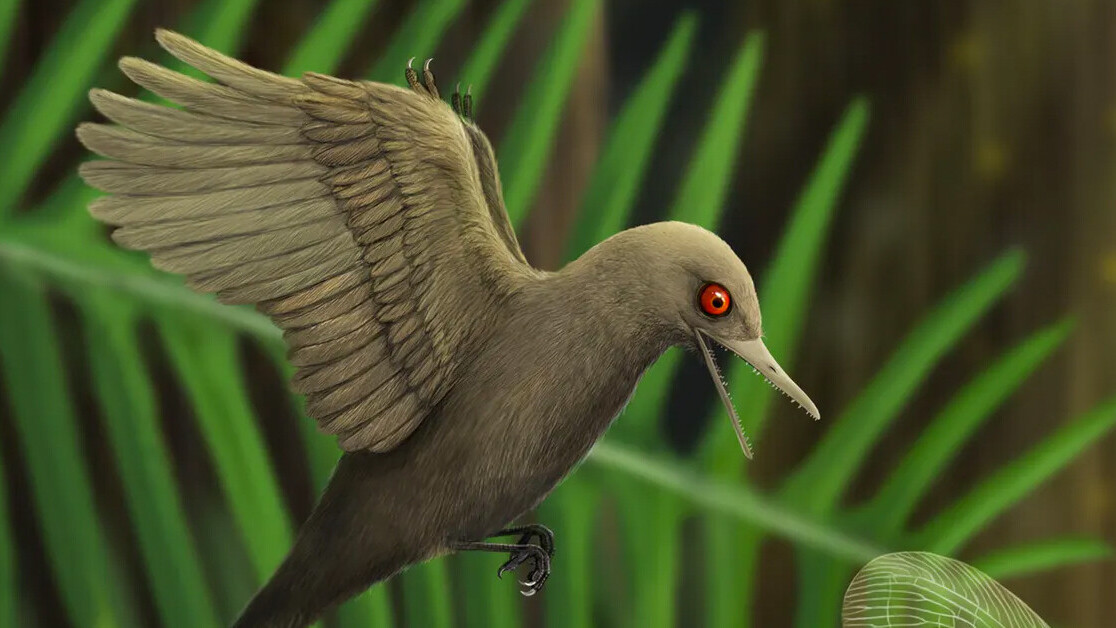
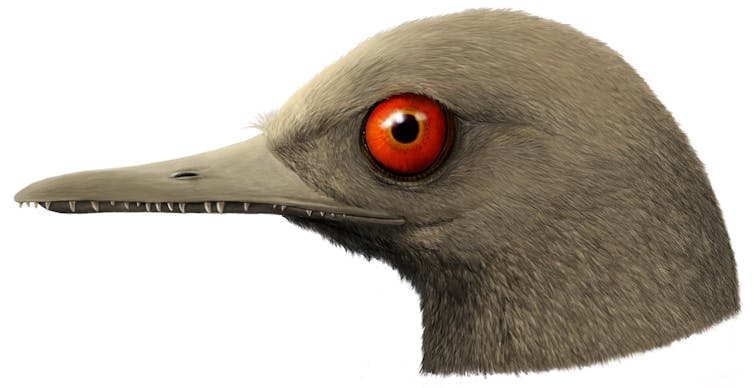
Oculudentavishas a long slender beak, a mouthful of needle-sharp teeth and massive eyes.
An artistic rendering of Oculudentavis.
Sadly the rest of the animals body is not preserved.
Perhaps it exists in another amber fragment awaiting discovery.
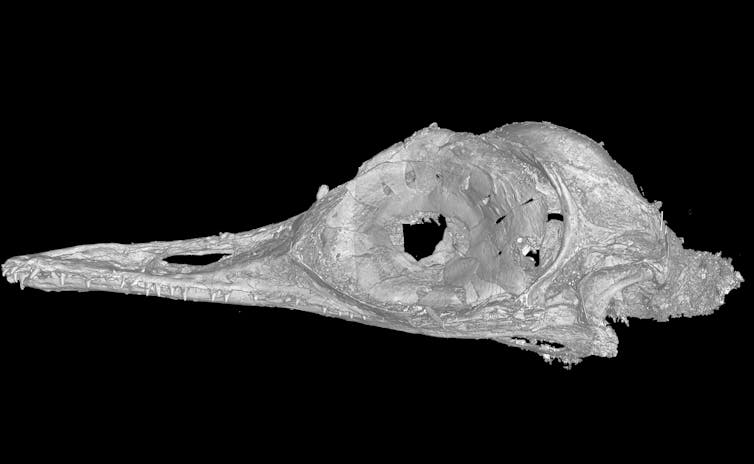
One particularly revealing feature is the skulls huge orbit (eye socket).
Significant find
The discovery is incredibly exciting for a number of reasons.
Oculudentavisis also incredibly small.
For example, there were oncedwarf mammothson Crete, Sardinia, and Cyprus.
The discovery ofOculudentavisis all the more fascinating because it was found in amber.
Lida Xing
Amber starts off as a sticky liquid resin oozing from wounds on trees.
Not even Michael Crichton, the author of Jurassic Park, could conceive of a dinosaur in amber.
A CT scan of the skull of Oculudentavis.

But unfortunately, it is doubtful that any DNA remains.
Oculudentavisactually isnt the first dinosaur to be found in amber.
In 2016,researchers reporteda piece of amber also from Myanmar with the tail of a feathered dinosaur.
The authors of this paper speculated that one day a complete dinosaur might be found in amber.
Well, we now have a head and a tail.
Its just a body that is missing.
My hope though is for a pterodactyl to be found in amber.
This article is republished fromThe ConversationbyDavid Martill, Professor of Palaeobiology,University of Portsmouthunder a Creative Commons license.
