Most online images are just a right-click away from being in someones personal collection.
Theyre free, pretty much.
So its tough for charities to fundraise with them.
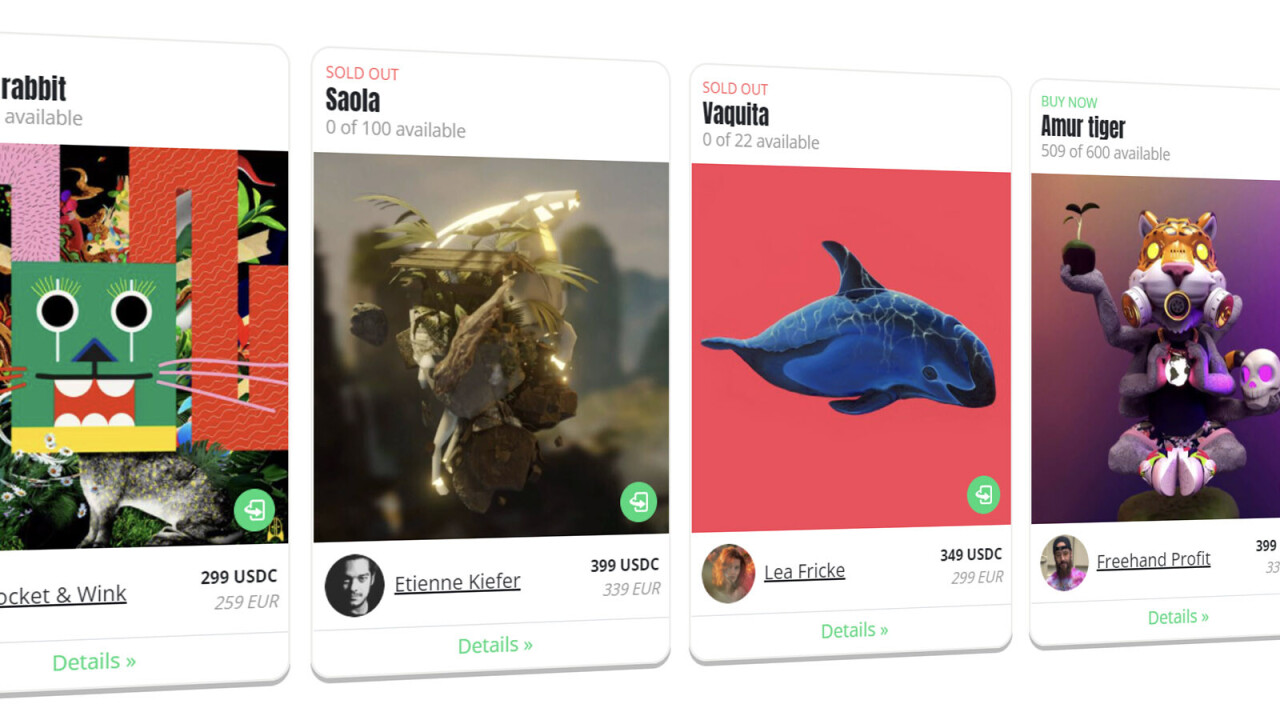
That is, until 2017 whennon-fungible tokens, or NFTs, came along.
Unlike regular pieces of digital media,NFTscant be so easily copied.
And for as long as they have existed, there have been conservation charities using them for fundraising.
Rewilder is a non-profit organizationusing NFT auctionsto raise funds to buy land for reforestation.
The charity claims to have raised US$241,700.
There have been various cartoon apessold for US$850,000, with the money going to orangutan conservation charities.
With many UK charities indire straits, its no surprise some want a piece of the crypto action too.
40% off TNW Conference!
Within just a few days, thesale was terminated.
The NFAs (or Non-Fungible Animals) project aimed to raise lots of money and awareness about endangered animals.
The number of rare animal images available for sale corresponded to the estimated number left in the wild.
There were 290 Giant ibis NFAs, for example.
An ibis jpeg would have raisedabout US$400through a single sale .
Eco-friendly NFTs?
According to one estimate, NFTs generate morecarbon emissions than Singaporeas a result of their energy consumption.
Specialist mining computers take turns validating transactions while guessing the combination of a long string of automatically generated digits.
The computer that correctly guesses the combination first wins a reward paid in acryptocurrencycalled ether.
Unlike regular NFTs though, WWF claimed that its NFAs were eco-friendly.
WWF wouldnt then need to take as much responsibility for its share of Ethereumsmonstrous carbon footprint.
So why the Twitter tantrums?
WWFs assumption was a tricky one.
There are also second-order effects to consider.
Ethereums carbon emissions are not related directly to the number of transactions occurring on the data pipe.
PoW mining is what gives Ethereumits dirty reputation.
By pumping up the hype around NFT markets, the collection coulddrive up the priceof Ethereum.
This would encourage more PoW mining, increasing the networks overall carbon footprint.
Initial buyers of NFAs would purchase them from WWFsdedicated website.
But buyers canrelisttheir artwork on the popular NFT marketplace, OpenSea.
Blockchain backlash
WWF is not the first charity to reevaluate its position on crypto-giving.
In 2021, Greenpeacestopped accepting bitcoin donationsafter seven years.Friends of the Earthsoon followed.
The WWF furore forced the wildlife charity,International Animal Rescueto park its NFT fundraising plans indefinitely.
Internet nonprofitsMozilla and Wikipediahave also reconsidered their crypto-giving strategies on climate change grounds.
There are multipleNFT-friendly blockchainsthat dont cause carbon headaches.
Even so,research showsits difficult for charities to fundraise using NFTs without getting their hands dirty.
Charities should be mindful ofgrowing public disapprovalof blockchain projects.Some arguethat the technology is driven by predatory marketing tactics.
Research also showscryptocurrencies can restrict the work of conservation charities.
In 2018, WWF partnered with blockchain developers,AidChain.
Using an Ethereum smart contract, donors could then track and manage how funds were spent.
Platforms like thiscan allow non-expert crypto donors to encode concrete conditions to their donations.
Break the conditions lose the funds.
Great for the donor.
Lousy for the charitys conservation experts.
Before reacting to crypto-giving hype, conservation charities such as WWF need to do their homework.
Animal jpegs and cryptocurrencies may seem a harmless way to fundraise.
But mindlessly jumping on the blockchain bandwagon could tie their hands while longstanding donors take their support elsewhere.
