I like imperfect things.
I like it that way, though.
Imperfection makes things more interesting.

When youre talking about business, however, theres money to be made potentially lots of money.
If business leaders are hesitant about this potential minefield, it just proves that theyre human.
Im talking about AI.

The potential upsides are huge because AI can finish processes that used to take hours in seconds.
That time savings is an improvement of several orders of magnitude.
Given such returns, its no wonder that companies are pouringbillionsof dollars into AI every year.
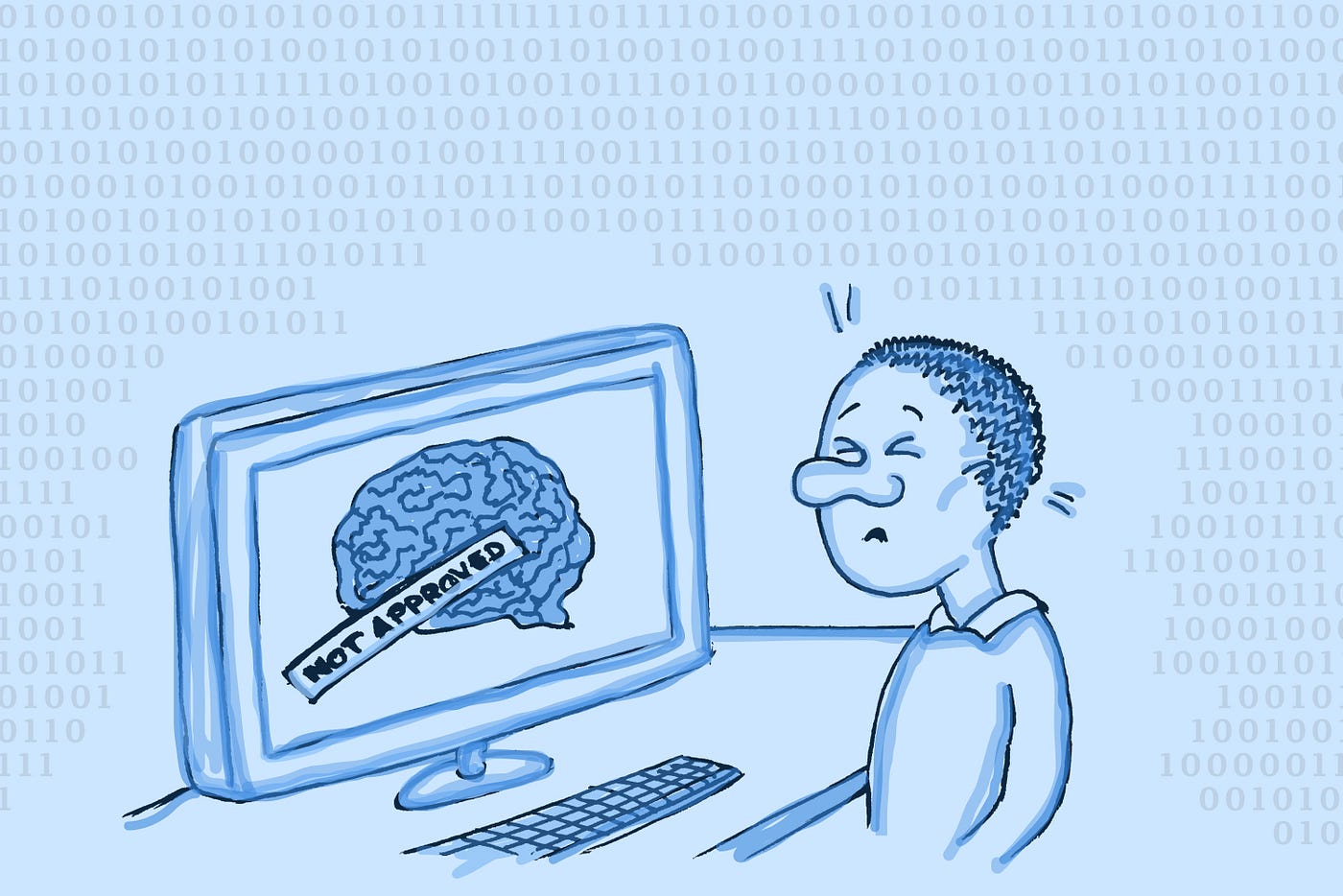
Despite this massive investment, AI uptake is still fitful.
It’s free, every week, in your inbox.
The all-or-nothing mentality
Larry Clark shared an anecdote inHarvard Business Reviewthat perfectly encapsulates the problem.

He spoke with a consultant whose client was making correct predictions about their industry 25 percent of the time.
The consultant advised them that an AI solution could get this number up to 50 percent.
The teams executive, however, refused to implement a solution that was wrong half the time.

A failure rate of 50 percent is, no doubt, enormous in most cases.
But it would still have been twice as good as the existing solution!
Many executives get disappointed when they see that AI wont revolutionize their company overnight.
I think this rule applies to many areas in tech, and especially AI.
Sure, great new developments are on the horizon, but you cant expect them to happen tomorrow.
Good things need time to develop.
Even in the fast-paced world of tech, patience is a virtue.
Leaders, therefore, shouldnt be disgruntled when AI doesnt suddenly transform their business into the next Google.
AI isnt always the best solution.
Executives care about results more than the technical details.
Of course, data scientists will continue to phrase their goals in technical jargon because its useful for them.
Complicating matters, however, is the fact that data scientists are in high demand.
Many companies are therefore understaffed in this area.
First, in-house training gets data scientists acquainted with the specifics of the company from day one.
Accuracy isnt everything
Machine learning algorithms should be as accurate as possible, right?
This notion sounds right, but accuracy isnt always the goal.
First of all, theres the risk of overtraining.
For example, consider an AI solution that classifies a data set with lots of different animal species.
Lets further imagine that this data set contains only one pop in each of cats, dogs and giraffes.
But it also contains two types of monkeys: black and orange.
How will the model classify that animal?
In this example, the risk of misclassifying new data arose because the model became too accurate during training.
Perfection isnt the goal here.
In the tumor example above, this would mean allowing the algorithm to misclassify tumors while training.
This recalibration could mean aiming for 90 percent accuracy instead of 98.
Thats paramount because encountering a data point unlike any others happens a lot.
Take it step by step.
Image by author
The training step isnt the only place where executives need to temper their ambitions.
That isnt how AI works yet, however.
Start incorporating AI on jobs that will get too repetitive for humans and then build it out from there.
Consider this a bottom-up approach.
Top-down approaches are difficult to nail with todays AI.
That doesnt preclude that this situation might change in the future, though.
Focus on those tools and resources first to check that your solutions have the biggest possible impact.
The good news is that its still not too late to get into AI.
And thats the right approach.
The technology is new enough that we havent yet tested all niches and edge cases.
You should test half-baked solutions and then iterate on them.
This exact problem has happened to me during my studies.
I had managed by myself to make the code three times more efficient than the old version.
After implementing my colleagues ideas, however, the improvement wasnt three- but five-fold.
Companies that aim for perfection too early or still havent decided to implement AI will be left behind.
Dont fret too much about imperfect code.
Theres always a bug to find, a tweak to make, a feature to add.
Youll need to learn to love this reality if you need AI for your business.
This rule isnt just about business, of course.
Always do the best you possibly can.
Just remember that the best is often far from perfect.
This article originally appeared onBuilt In.
