I am a professional musician and a professor ofmusic technology who studies acoustics.
My work investigates the intersection betweenthe scientific, artistic, andsubjective human elementsof sound.
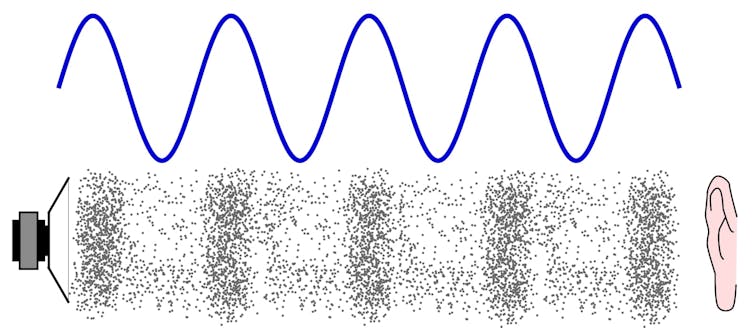
In physics, sound is made of air vibrations consisting of a series of high and low pressure zones.

These are the cycles of a sound wave.
Counting the number of cycles that occur per seconddetermines the frequency, or pitch, of the sound.
Higher frequencies mean higher pitches.
40% off TNW Conference!
The higher the pressure, the louder the sound.
The average person can hear a huge range of pitches and different levels of loudness.
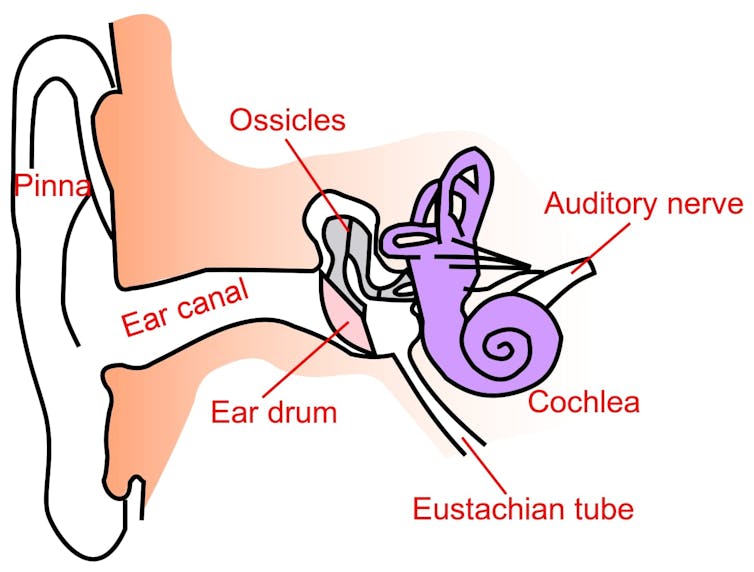
So how does the ear work?
These mechanical vibrations become fluid vibrations in your inner ear.
Sensitive nerves then turn those vibrations into electrical signals that your brain interprets as sound.
Generally speaking, the human ear ismore sensitive to middle frequencies than low or high pitches.
Researchers think this may bedue to evolutionary factors.
But headphone engineers definitely need to consider how human perception differs from pure physics.

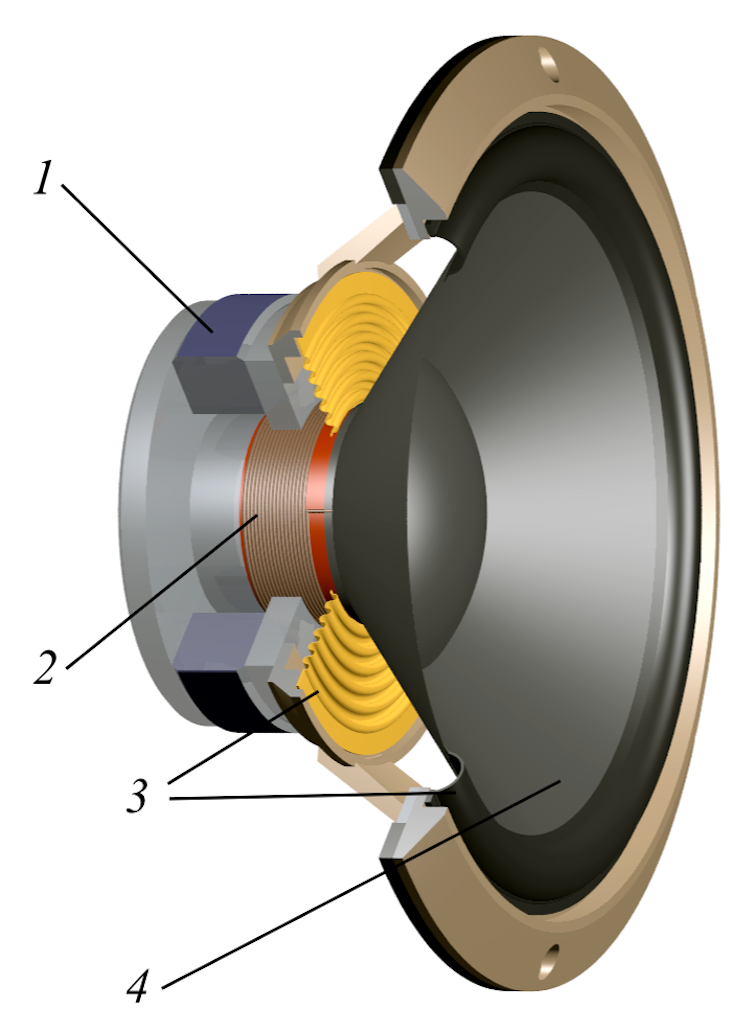
Headphones both bigger varieties that sit over your ears as well as small earbuds are just small speakers.
This is the music that you hear.
Ideally, a speaker would convert the electrical signals of the input perfectly into sound representations.
However, the real physical world has limitations.
This leads to distortion and some frequencies being louder or softer than the original.
The reason two equally expensive headphones can sound or feel different is that they distort things in different ways.
Headphones are as mucha question of personal tasteas anything else.
But music or recreational listening arent the only things to consider.
